Screw Assembly Machines for Quality Manufacturing | Precision Fastening Systems
How Screw Assembly Machines Enhance Product Quality
In modern manufacturing, precision and consistency are non-negotiable for maintaining product quality. Screw assembly machines have emerged as critical tools for achieving these goals, offering advanced capabilities that manual processes simply cannot match. Here’s how these automated systems elevate quality standards across industries.
1. Precision-Driven Fastening
Unlike manual screwdriving, automated assembly systems ensure micron-level accuracy in screw placement and torque application. Integrated torque sensors and programmable logic controllers (PLCs) eliminate under-tightening or over-tightening risks, which account for up to 23% of product defects in manual workflows. This precision prevents stripped threads, material stress, and component misalignment – common failure points in mechanical assemblies.
2. Consistency Across Production Runs
Automated screw feeding and driving mechanisms maintain identical assembly parameters for every unit, regardless of production volume. Even skilled technicians cannot replicate the hour-after-hour consistency of machines, particularly in high-speed operations. This uniformity directly reduces warranty claims and field failures by ensuring every product meets exact design specifications.
3. Reduced Human Error
Fatigue and distractions during manual screw assembly lead to skipped fasteners, cross-threading, and improper seating. Automated systems use vision systems and force feedback to verify each screw’s presence, orientation, and seating depth. This 100% inspection rate catches errors in real-time, preventing defective units from advancing down the production line.
4. Advanced Process Monitoring
Next-generation screw assembly machines collect detailed process data – torque curves, cycle times, and error rates – creating full traceability for quality audits. Manufacturers gain actionable insights to optimize tightening profiles, predict maintenance needs, and identify materials-related issues. This data-driven approach enables continuous process improvement rather than relying on post-production inspections.
5. Adaptability to Complex Designs
As products incorporate smaller components and mixed materials, automated systems adapt through multi-axis motion control and adjustable torque settings. Machines can handle micro-screws for electronics as well as large fasteners for heavy equipment while maintaining quality standards. Smart collision detection further prevents damage to delicate parts during assembly.
The integration of screw assembly machines represents more than just automation – it’s a strategic quality enhancement initiative. By ensuring every fastener meets exact specifications and providing unprecedented process control, these systems help manufacturers achieve near-zero defect rates while building products designed for long-term reliability. As industry quality expectations continue rising, automated screw assembly is becoming essential rather than optional for competitive manufacturing operations.
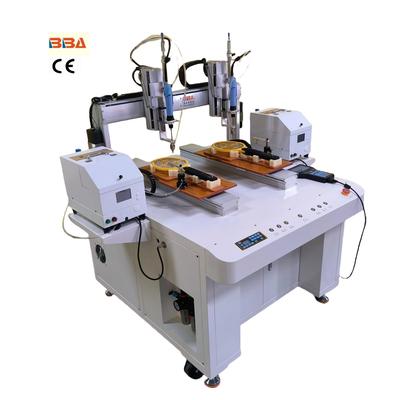
| Product Name | Applicable industries |
| Screw Locking Robot | Industrial Control Panel Assembly |