Stepper vs Servo Motor for Robotic Screw Drivers: Complete Comparison Guide
Stepper Motor vs. Servo Motor in Robotic Screw Machines
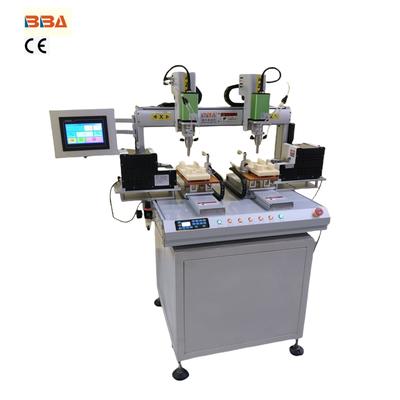
Robotic screw machines are critical components in modern assembly lines, offering precision and efficiency for tasks like fastening screws in automotive, electronics, and consumer goods manufacturing. The choice between stepper motors and servo motors for these systems significantly impacts performance, cost, and reliability. This article explores the key differences, advantages, and ideal use cases for both motor types in robotic screw-driving applications.
Stepper Motors: Precision Through Simplicity
Stepper motors operate by dividing rotational motion into discrete steps, typically ranging from 0.9° to 1.8° per step. This open-loop control system eliminates the need for position feedback sensors, reducing hardware complexity and cost. In robotic screw machines, stepper motors excel in applications requiring:
- Low-to-medium torque requirements
- Predictable, repeatable motion at consistent speeds
- Cost-sensitive projects with limited dynamic load variation
Their simplicity makes stepper motors easier to integrate and program for basic screw-driving tasks. However, they may lose synchronization under sudden load changes or high inertial forces, potentially causing missed steps and positioning errors.
Servo Motors: Closed-Loop Adaptability
Servo motors leverage closed-loop control systems with real-time feedback from encoders to maintain precise positioning. This dynamic adjustment capability proves advantageous for robotic screw machines that require:
- High-speed operation with variable torque demand
- Adaptive response to inconsistent material surfaces
- Continuous monitoring of angular position and velocity
The feedback mechanism enables servo motors to compensate for load fluctuations during screw insertion, ensuring consistent torque application even when dealing with uneven surfaces or material variations. While servos offer superior dynamic performance, their complex control system and higher component costs may not justify the investment for simpler applications.
Key Selection Criteria
When choosing between stepper and servo motors for robotic screw machines, consider these factors:
1. Torque Requirements:
Stepper motors perform best in low-to-moderate torque scenarios (<2 Nm), while servos handle higher torque loads more efficiently.
2. Dynamic Response:
Servo motors adjust to load variations within milliseconds, making them ideal for high-speed lines with frequent start/stop cycles.
3. Energy Efficiency:
Servo systems consume power proportional to workload, whereas steppers draw full current even at idle, potentially increasing energy costs.
Application-Specific Recommendations
For small-scale assembly systems with stable loads and fixed-speed operation, stepper motors provide adequate performance at lower costs. High-volume production lines handling mixed materials or requiring adaptive torque control should prioritize servo motor solutions despite the higher initial investment. A hybrid approach using steppers for positioning and servos for torque-sensitive phases can optimize cost-to-performance ratios in complex systems.
Understanding these motor characteristics enables engineers to design robotic screw machines that balance precision, speed, and operational costs effectively.
| Product Name | Applicable Industry |
| Screw Fastening Unit | Security Equipment Manufacturing |