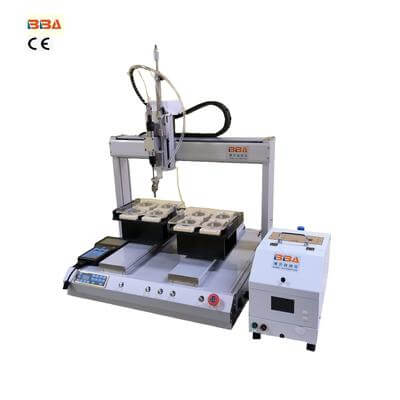
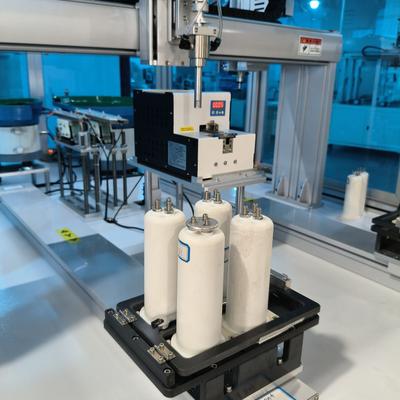
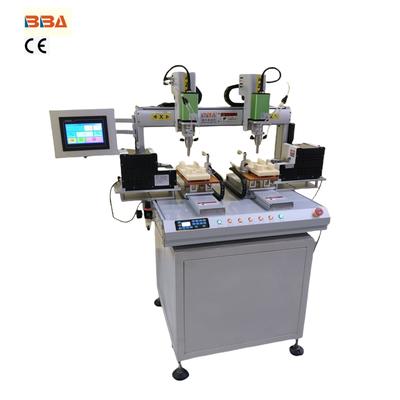
Precision Screw Tightening Inspection System | Auto Screwdriver Machine Applications
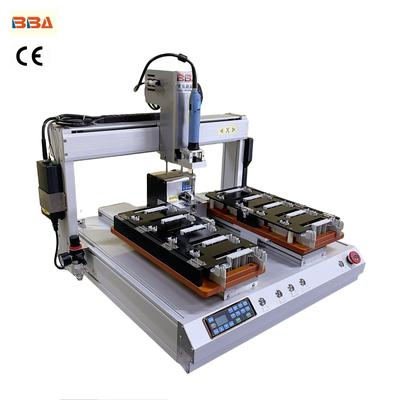
| Product Name | Applicable industries |
| Auto Screwdriver Machine | Home Appliance Production |
In modern manufacturing, precision is the cornerstone of quality. One critical aspect of this precision lies in screw tightening accuracy, a process that directly impacts product reliability, safety, and performance. Inspection systems designed for screw tightening accuracy have become indispensable tools for industries ranging from automotive assembly to electronics production. These systems ensure that every fastener meets exact specifications, eliminating human error and delivering consistent results across high-volume operations.
At the heart of these inspection systems is advanced sensor technology. High-resolution torque sensors measure the rotational force applied during tightening, while angle sensors track the exact rotation of the screwdriver or automated tool. This dual-data approach allows the system to detect deviations as small as 1% from predefined torque and angle thresholds. Machine vision components further enhance accuracy by verifying screw head alignment, thread engagement, and seating depth, ensuring no fastener is overlooked or improperly installed.
Integration with production lines occurs through programmable logic controllers (PLCs) that communicate with robotic arms, torque tools, and conveyor systems. Real-time analytics dashboards display process metrics, highlighting trends and potential issues before they escalate. For example, gradual increases in required torque for specific assembly points might indicate thread wear or material deformation, triggering predictive maintenance alerts. This proactive approach reduces downtime and prevents costly rework.
The benefits of implementing screw tightening inspection systems extend beyond quality control. Manufacturers report up to 40% reductions in warranty claims related to mechanical failures caused by loose fasteners. Energy efficiency improves as optimized tightening processes minimize unnecessary torque application, reducing wear on both tools and components. Additionally, automated documentation generated by these systems simplifies compliance with industry standards such as ISO 9001 and IATF 16949, providing auditable records for every assembled product.
Future developments in this field focus on AI-driven adaptive tightening algorithms. These systems analyze material properties, environmental conditions, and historical data to dynamically adjust torque profiles during operation. For instance, when assembling temperature-sensitive materials, the system might compensate for thermal expansion coefficients in real time. Such innovations promise to push the boundaries of precision manufacturing, enabling new applications in microelectronics and medical device assembly where tolerances measure in micrometers.
As industries continue to demand higher quality and faster production speeds, inspection systems for screw tightening accuracy will remain vital. Their ability to combine mechanical precision with digital intelligence creates a new standard for manufacturing excellence – one where every screw, in every product, contributes to a reputation for reliability that customers can trust.