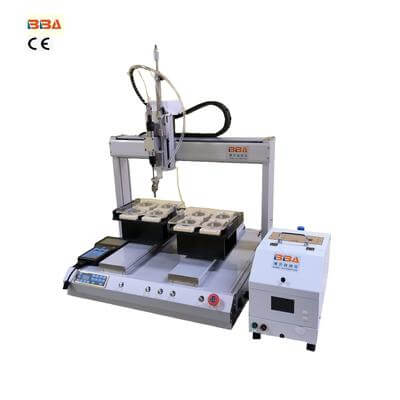
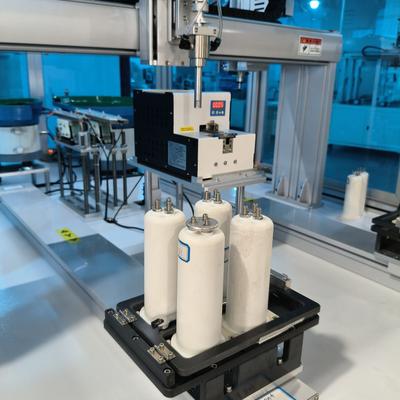
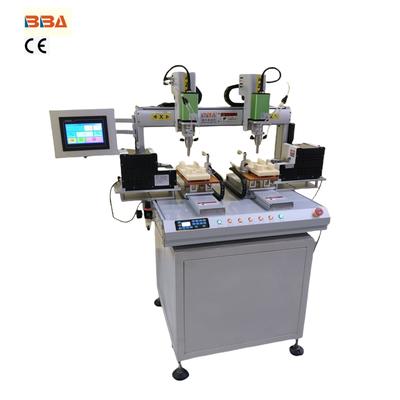
In the rapidly evolving landscape of industrial automation, robotic screwdrivers have emerged as indispensable tools for precision assembly processes. These advanced machines combine mechanical engineering, sensor technology, and intelligent software to revolutionize how components are fastened in modern manufacturing. This article explores the intricate workings of robotic screwdrivers and their transformative impact on production lines.
### Core Mechanism and Operation
At its fundamental level, a robotic screwdriver consists of three primary components: a robotic arm for positioning, a torque-controlled driving mechanism, and an integrated vision system. The process begins with the robotic arm maneuvering the screwdriver tip to the exact coordinate of the target screw hole, guided by pre-programmed instructions or real-time visual feedback. Advanced models employ 3D vision systems that can detect hole positions even when components shift slightly during assembly.
The driving mechanism incorporates precision torque control, typically ranging from 0.1 Nm to 10 Nm, allowing for consistent fastening across various screw sizes and materials. Modern systems automatically adjust rotational speed (typically 500-3000 RPM) based on screw type and material hardness, preventing thread stripping or component damage. High-end models feature dual-axis control for simultaneous rotation and vertical pressure application in challenging assembly scenarios.
### Sensor Integration and Quality Assurance
Robotic screwdrivers integrate multiple sensors to ensure assembly accuracy. Force-torque sensors monitor resistance during fastening, detecting issues like cross-threading or misalignment in real time. Infrared sensors verify screw presence in the driver bit, while laser measurement systems confirm proper screw seating post-installation.
The control unit processes sensor data at millisecond intervals, achieving an error rate below 0.01% in controlled environments. All fastening parameters are logged in a central database for compliance tracking and process optimization.
### Software Architecture and Adaptive Learning
Modern systems employ machine learning algorithms to optimize operational parameters based on historical data. Cloud-connected platforms enable remote monitoring and predictive maintenance, with algorithms forecasting component wear. Collaborative robots (cobots) use LiDAR and proximity sensors for safe human interaction, featuring intuitive drag-and-drop programming interfaces.
### Industrial Applications and Efficiency Gains
Widely used in automotive, electronics, and aerospace industries, these systems achieve 120 screws per minute with micron-level precision. Manufacturers report 30-50% fewer defects, 25% reduced material waste, and 60% improved equipment effectiveness (OEE). Energy-efficient designs consume 35% less power while maintaining high throughput.
As Industry 4.0 advances, future developments may include quantum-enhanced sensors and AI-driven predictive quality control, further solidifying robotic screwdrivers as critical components in smart factories.
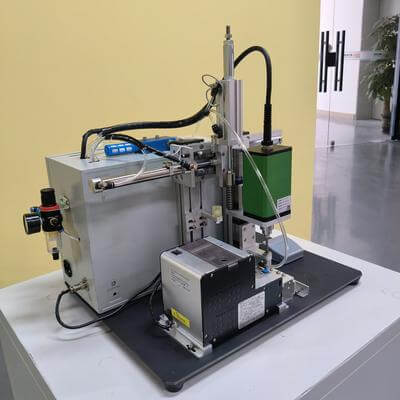 In the rapidly evolving landscape of industrial automation, robotic screwdrivers have emerged as indispensable tools for precision assembly processes. These advanced machines combine mechanical engineering, sensor technology, and intelligent software to revolutionize how components are fastened in modern manufacturing. This article explores the intricate workings of robotic screwdrivers and their transformative impact on production lines.
### Core Mechanism and Operation
At its fundamental level, a robotic screwdriver consists of three primary components: a robotic arm for positioning, a torque-controlled driving mechanism, and an integrated vision system. The process begins with the robotic arm maneuvering the screwdriver tip to the exact coordinate of the target screw hole, guided by pre-programmed instructions or real-time visual feedback. Advanced models employ 3D vision systems that can detect hole positions even when components shift slightly during assembly.
The driving mechanism incorporates precision torque control, typically ranging from 0.1 Nm to 10 Nm, allowing for consistent fastening across various screw sizes and materials. Modern systems automatically adjust rotational speed (typically 500-3000 RPM) based on screw type and material hardness, preventing thread stripping or component damage. High-end models feature dual-axis control for simultaneous rotation and vertical pressure application in challenging assembly scenarios.
### Sensor Integration and Quality Assurance
Robotic screwdrivers integrate multiple sensors to ensure assembly accuracy. Force-torque sensors monitor resistance during fastening, detecting issues like cross-threading or misalignment in real time. Infrared sensors verify screw presence in the driver bit, while laser measurement systems confirm proper screw seating post-installation.
The control unit processes sensor data at millisecond intervals, achieving an error rate below 0.01% in controlled environments. All fastening parameters are logged in a central database for compliance tracking and process optimization.
### Software Architecture and Adaptive Learning
Modern systems employ machine learning algorithms to optimize operational parameters based on historical data. Cloud-connected platforms enable remote monitoring and predictive maintenance, with algorithms forecasting component wear. Collaborative robots (cobots) use LiDAR and proximity sensors for safe human interaction, featuring intuitive drag-and-drop programming interfaces.
### Industrial Applications and Efficiency Gains
Widely used in automotive, electronics, and aerospace industries, these systems achieve 120 screws per minute with micron-level precision. Manufacturers report 30-50% fewer defects, 25% reduced material waste, and 60% improved equipment effectiveness (OEE). Energy-efficient designs consume 35% less power while maintaining high throughput.
As Industry 4.0 advances, future developments may include quantum-enhanced sensors and AI-driven predictive quality control, further solidifying robotic screwdrivers as critical components in smart factories.
In the rapidly evolving landscape of industrial automation, robotic screwdrivers have emerged as indispensable tools for precision assembly processes. These advanced machines combine mechanical engineering, sensor technology, and intelligent software to revolutionize how components are fastened in modern manufacturing. This article explores the intricate workings of robotic screwdrivers and their transformative impact on production lines.
### Core Mechanism and Operation
At its fundamental level, a robotic screwdriver consists of three primary components: a robotic arm for positioning, a torque-controlled driving mechanism, and an integrated vision system. The process begins with the robotic arm maneuvering the screwdriver tip to the exact coordinate of the target screw hole, guided by pre-programmed instructions or real-time visual feedback. Advanced models employ 3D vision systems that can detect hole positions even when components shift slightly during assembly.
The driving mechanism incorporates precision torque control, typically ranging from 0.1 Nm to 10 Nm, allowing for consistent fastening across various screw sizes and materials. Modern systems automatically adjust rotational speed (typically 500-3000 RPM) based on screw type and material hardness, preventing thread stripping or component damage. High-end models feature dual-axis control for simultaneous rotation and vertical pressure application in challenging assembly scenarios.
### Sensor Integration and Quality Assurance
Robotic screwdrivers integrate multiple sensors to ensure assembly accuracy. Force-torque sensors monitor resistance during fastening, detecting issues like cross-threading or misalignment in real time. Infrared sensors verify screw presence in the driver bit, while laser measurement systems confirm proper screw seating post-installation.
The control unit processes sensor data at millisecond intervals, achieving an error rate below 0.01% in controlled environments. All fastening parameters are logged in a central database for compliance tracking and process optimization.
### Software Architecture and Adaptive Learning
Modern systems employ machine learning algorithms to optimize operational parameters based on historical data. Cloud-connected platforms enable remote monitoring and predictive maintenance, with algorithms forecasting component wear. Collaborative robots (cobots) use LiDAR and proximity sensors for safe human interaction, featuring intuitive drag-and-drop programming interfaces.
### Industrial Applications and Efficiency Gains
Widely used in automotive, electronics, and aerospace industries, these systems achieve 120 screws per minute with micron-level precision. Manufacturers report 30-50% fewer defects, 25% reduced material waste, and 60% improved equipment effectiveness (OEE). Energy-efficient designs consume 35% less power while maintaining high throughput.
As Industry 4.0 advances, future developments may include quantum-enhanced sensors and AI-driven predictive quality control, further solidifying robotic screwdrivers as critical components in smart factories.