Multi-Axis Tightening Systems: Precision Programming for Industrial Automation | Torque Control & Robotic Assembly Solutions
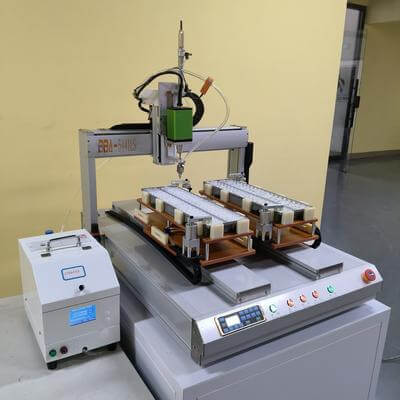
| Product Name | Applicable industries |
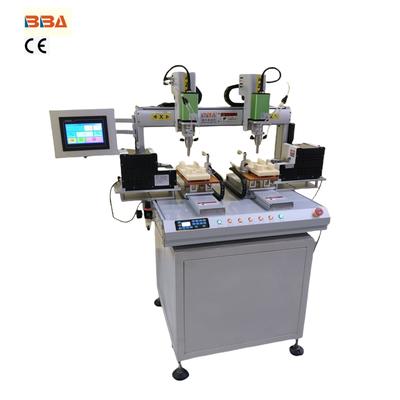
| Dual Head Screwdriver | Automotive Electronics Assembly |
Programming Multi-Axis Tightening Paths: Precision in Industrial Automation
In modern manufacturing, the demand for precision and efficiency drives innovation in automated systems. Multi-axis tightening systems are critical in industries requiring high-accuracy fastener assembly, such as automotive, aerospace, and electronics. Programming these systems to execute complex tightening paths ensures consistent quality, reduces human error, and enhances production throughput. This article explores the technical foundations and strategic considerations for optimizing multi-axis tightening operations.
Understanding Multi-Axis Tightening Systems
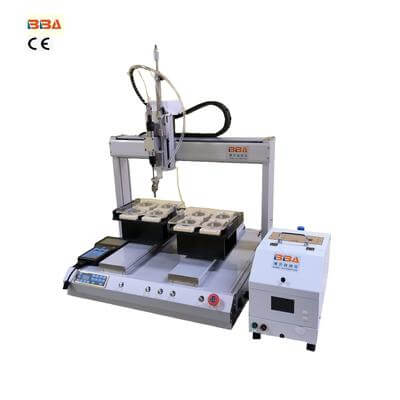
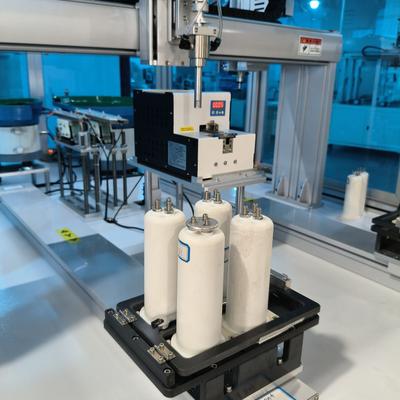
Multi-axis tightening systems integrate robotics, torque control, and advanced software to perform synchronized fastener installation across multiple planes. Unlike single-axis tools, these systems can handle intricate geometries, dynamically adjust angles, and apply varying torque values within a single operation. Engineers program robotic paths using CAD/CAM data or teach pendant interfaces to align with component specifications. Adaptive algorithms enable real-time corrections, compensating for material variances or positional shifts detected by vision systems or force sensors.
Key Technical Considerations
Successful programming relies on three core elements: motion synchronization, torque sequencing, and collision avoidance. Motion profiles must ensure all axes work cohesively to avoid mechanical stress or misalignment. Torque sequencing algorithms define the order and magnitude of force application, particularly for assemblies requiring staggered fastening patterns. Collision detection protocols, powered by LiDAR or proximity sensors, halt operations if deviations exceed safety thresholds. Additionally, programmers must account for tool inertia, vibration damping, and thermal expansion to maintain positional accuracy over extended cycles.
Optimizing Path Efficiency
Advanced path-planning techniques minimize cycle times while preserving joint integrity. Spiral tightening patterns, for instance, distribute stress evenly across components, while zigzag paths reduce tool repositioning. Simulation software predicts bottlenecks by modeling robot kinematics and torque dynamics, allowing pre-production refinement. Data-driven optimization uses machine learning to analyze historical performance, identifying ideal speed-torque curves for specific materials. The integration of edge computing enables localized decision-making, reducing latency during high-speed operations.
Future Developments
Emerging technologies like AI-guided autonomous programming and digital twins are reshaping multi-axis tightening systems. Predictive maintenance models leverage IoT sensors to forecast tool wear, while augmented reality interfaces simplify operator training. The shift toward modular designs allows rapid reconfiguration of axes and end-effectors, catering to low-volume, high-mix production. Combined with energy-efficient servo drives, these advancements reinforce the role of intelligent tightening systems in sustainable manufacturing.
As industries embrace Industry 4.0, the ability to program and adapt multi-axis tightening paths will remain a cornerstone of competitive manufacturing. By balancing computational rigor with operational flexibility, engineers can unlock unprecedented levels of precision and productivity in automated assembly processes.