Optimizing SMT Manufacturing with Automated Screw Locking Solutions | Precision Assembly Integration
| Product Name | Applicable industries |
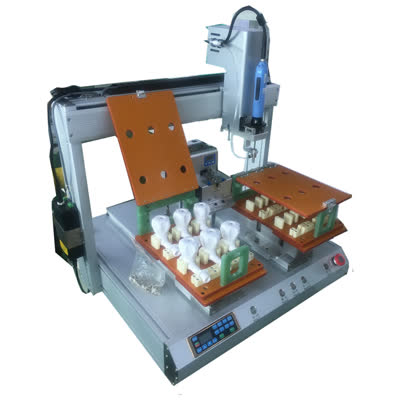
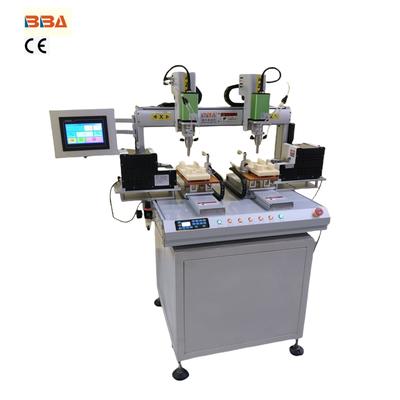
| Dual Head Screwdriver | Laptop and Tablet Assembly |
Optimizing Manufacturing Precision: The Role of Screw Locking Machine Integration in SMT Lines
As surface mount technology (SMT) continues to dominate modern electronics manufacturing, the demand for seamless integration of auxiliary equipment has become critical. Among these, automated screw locking machines have emerged as a pivotal component for enhancing production efficiency and product reliability in SMT workflows.
Enhancing Assembly Accuracy and Speed
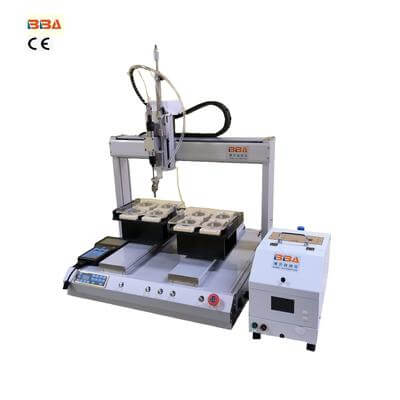
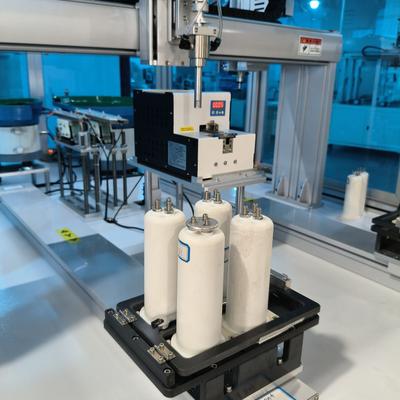
Traditional manual screw fastening processes are prone to inconsistencies, leading to assembly defects or uneven torque application. Integrated screw locking systems eliminate human error by employing precision-guided robotic arms and programmable logic controllers (PLCs). These machines ensure uniform torque control across all screw points, which is vital for maintaining structural integrity in components such as PCB housings, connectors, or heat sinks. By synchronizing with SMT pick-and-place systems, they reduce idle time between processes, boosting overall line throughput by up to 30%.
Adaptable Solutions for Diverse Production Needs
Modern screw locking machines offer unmatched flexibility through modular designs. Key features include:
- Multi-axis adjustment capabilities for accommodating varying screw positions
- Quick-change tooling systems supporting M1.0 to M4.0 screw sizes
- Vision-assisted alignment using high-resolution cameras
These systems seamlessly communicate with SMT line software, enabling autonomous adjustments for batch changes without requiring manual recalibration.
Data-Driven Quality Assurance
Integration with factory IoT platforms allows real-time monitoring of screw fastening parameters. Manufacturers gain access to torque curves, error logs, and process analytics, facilitating predictive maintenance and rapid troubleshooting. This data transparency helps maintain ISO-compliant quality standards while reducing scrap rates caused by fastener-related failures.
Industry Applications and Future Trends
From consumer electronics to automotive control modules, automated screw locking systems address critical assembly requirements in moisture-sensitive or vibration-prone environments. Emerging innovations incorporate AI-powered defect detection and cobot-assisted loading mechanisms, further bridging the gap between SMT processes and final product assembly.
As smart manufacturing evolves, the integration of intelligent screw fastening solutions into STEM lines will remain essential for achieving zero-defect production targets while adapting to shrinking product life cycles.