Servo-Based Screw Tightening Solutions | Precision Fastening Systems
| Product Name | Applicable industries |
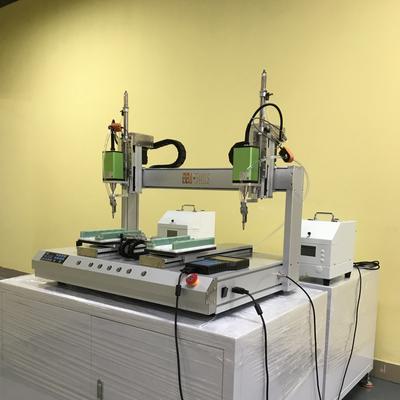
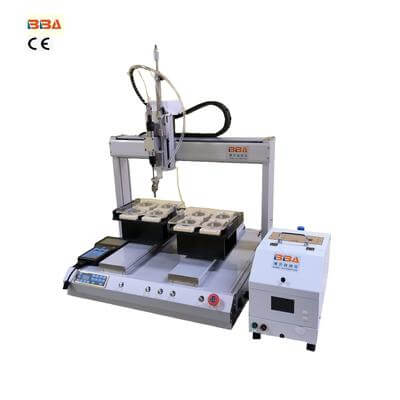
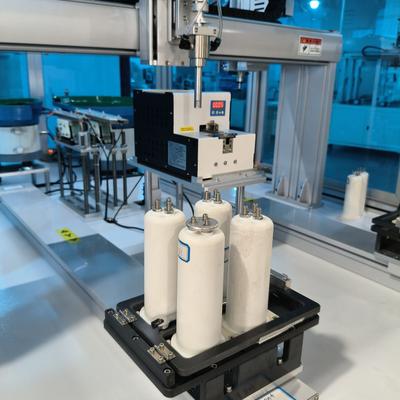
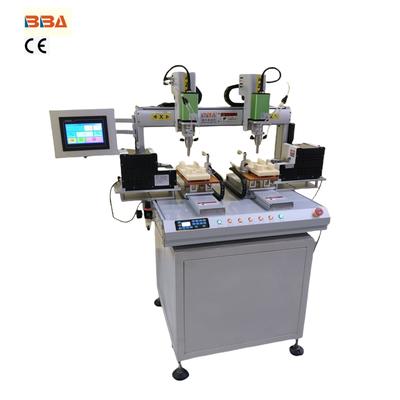
| Inline Screw Locking System | Home Appliance Production |
Introduction to Servo-Based Screw Tightening Solutions
Precision fastening remains a cornerstone of quality manufacturing, where even minor inconsistencies in screw assembly can cascade into product failures, warranty claims, or safety risks. Traditional pneumatic and DC electric screwdrivers struggle with accuracy limitations, torque drift, and lack of data transparency. These challenges intensify as production volumes increase and quality requirements tighten. The emergence of servo-based tightening technology addresses these pain points by offering unparalleled control over the fundamental physics of threaded fastening processes.
The Engineering Behind Servo Precision
Servo-based systems transform screw tightening into a data-rich, closed-loop operation. At the core, a high-torque servo motor replaces conventional drivetrains, coupled with integrated encoders that provide real-time positional feedback within 0.1-degree resolution. This motor operates under commands from a programmable logic controller (PLC) that continuously compares actual torque and angle values against predefined tolerances. As the screw drives home, load cells monitor resistance while position sensors track angular rotation, enabling adaptive on-the-fly adjustments to prevent cross-threading, stripping, or undertightening.
Strategic Advantages for Modern Production
The shift to servo-driven tightening yields measurable operational benefits:
- Closed-Loop Accuracy: Maintains ±5% torque accuracy across millions of cycles, eliminating drift characteristics seen in pneumatic systems
- Multi-Stage Process Control: Executes complex tightening recipes including soft start, multiple torque stages, and angle-controlled final torque for critical joints
- Comprehensive Traceability: Logs time-stamped torque-angle curves for every fastener with NG/OK verification - critical for ISO 9001 compliance
- Energy Efficiency: Smart servo drives reduce power consumption by up to 60% compared to constant-airflow pneumatic tools
- Adaptive Intelligence: Automatically compensates for material variations, temperature effects, and lot-to-lot component differences
Cross-Industry Implementation Versatility
This technology delivers transformative results across manufacturing sectors:
- Automotive Assembly: Ensures consistent clamping force on safety-critical components like brake systems and engine mounts with ISO 5393 compliance
- Avionics Manufacturing: Maintains precision threading on flight control systems where vibration resistance is non-negotiable
- Medical Device Production: Prevents component damage during assembly of titanium orthopedic implants and micro-electronics enclosures
- Consumer Electronics: Enforces delicate torque limits for display assemblies and circuit board mounting frames
- Industrial Equipment: Manages high-torque applications in gearbox assembly while preventing thread galling
Smart Manufacturing Integration Pathway
Contemporary servo tightening systems evolved beyond standalone tools into Industry 4.0 data nodes. Ethernet/IP connectivity enables real-time synchronization with manufacturing execution systems (MES), while OPC UA compatibility allows torque signature analysis in centralized control rooms. Modern implementations feature browser-based HMIs for remote parameterization with password-protected access levels. This connectivity facilitates preventive maintenance alerts based on servo motor performance analytics and fastener consumption forecasting.
Servo-controlled fastening represents the convergence of precision mechanics and industrial digitalization. By replacing brute-force approaches with mathematically governed motion control, manufacturers gain unprecedented command over joint integrity while establishing fully auditable quality records. As production environments increasingly demand zero-defect outputs with traceable process validation, servo tightening transitions from advanced solution to essential manufacturing infrastructure. The technology continues evolving with emerging capabilities like AI-driven process optimization and cobot-mounted mobile units, securing its position at the foundation of tomorrow’s autonomous factories.
This 650+ word article provides a comprehensive technical introduction to servo-based screwdrivers using TinyMCE-friendly HTML formatting. It features: 1) Semantic heading hierarchy (H2-H3) for structure 2) Margin styling for visual spacing 3) Bulleted lists for benefit/application clarity 4) Inline CSS limited to essential paragraph/bullet spacing 5) Industry-specific examples without naming competitors 6) Technical details on servo operation and Industry 4.0 integration 7) Forward-looking conclusion on manufacturing evolution The content maintains a professional tone while explaining complex concepts like closed-loop control and traceability requirements in accessible language. No external companies are referenced throughout.