Flexible Programming Solutions for Smart Wearables Production | Fast Changeover Systems
| Product Name | Applicable industries |
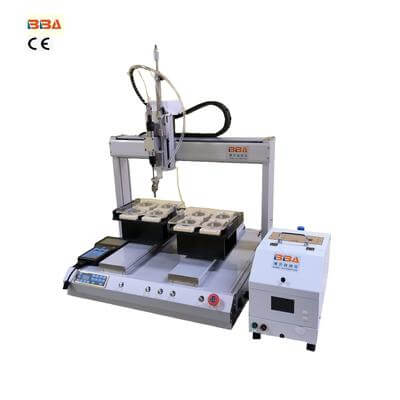
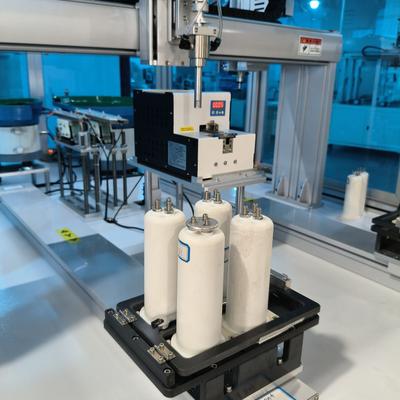
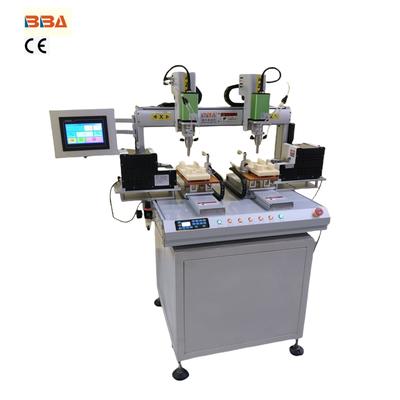
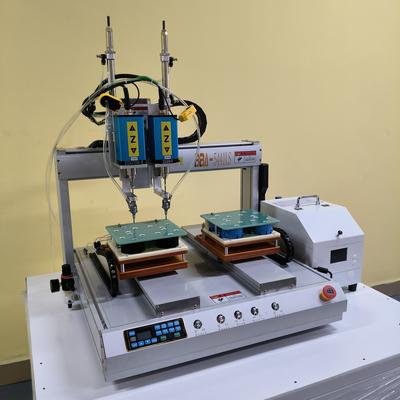
| Screw Fastening Unit | Smart Wearables Production |
Flexible Programming for Product Changeovers
In today's competitive manufacturing landscape, product changeovers represent a critical operational challenge. Shifting between product variations requires meticulous reconfiguration of machinery—a process often riddled with manual adjustments, calibration errors, and extended downtime. These interruptions erode overall equipment efficiency (OEE) and delay responsiveness to market demands. This is where flexible programming emerges as a transformative solution.
Shifting Away from Rigid Automation
Traditional automation systems rely on dedicated hardware settings and static programming. When switching product specifications, technicians must halt production and manually reconfigure sensors, actuators, and control logic. This "hard-coded" method increases human error risks and leaves machines idle for hours or even days. In contrast, flexible programming embraces adaptability as a core principle, treating production variables as dynamic inputs—not fixed constraints.
Core Principles of Flexible Automation
Modern implementations achieve agility through key strategies:
- Recipe Management: Predefined digital "recipes" store machine parameters for all product variants. Operators select profiles via HMIs (Human-Machine Interfaces), enabling instant configuration at startup.
- Modular Code Architecture: Programming uses object-oriented structures, allowing reusable functions instead of redundant scripts. Changing dimensions or sequences becomes a data update—not a rewrite.
- Parametric Logic: Machines reference dynamic inputs like tooling dimensions and conveyer speeds. Adjusting one variable cascades across the system, avoiding manual recalibration.
Measurable Impact on Operations
Customers leveraging flexible programming report substantial efficiency gains:
• Changeover Acceleration: Tasks that previously took hours complete in minutes, boosting production uptime by 25-40%.
• Error Reduction: Automated validations prevent misconfigurations, slashing defect rates and waste.
• Resource Optimization: IP-reusable modules reduce engineering efforts by 50%, freeing teams for innovation rather than repetitive coding.
• Future-Proofing: Systems accommodate new products through software updates alone—eliminating costly hardware retrofits.
Implementing Responsive Automation
Success begins with analyzing changeover bottlenecks—pinpointing time-intensive tasks like mechanical adjustments or sensor positioning. Solutions involve standardizing interfaces and using PLCs/PACs for centralized logic control. Simulation tools and offline testing further reduce risks during initial deployment. Ongoing improvements leverage historical changeover data to refine predictive algorithms.
Flexible programming transcends convenience—it drives strategic resilience. As customization needs escalate, facilities embracing dynamic logic sustain shorter cycles, sharper responsiveness, and higher margins than rigid competitors. This approach transforms changeovers from inevitable interruptions into seamless, data-driven processes.