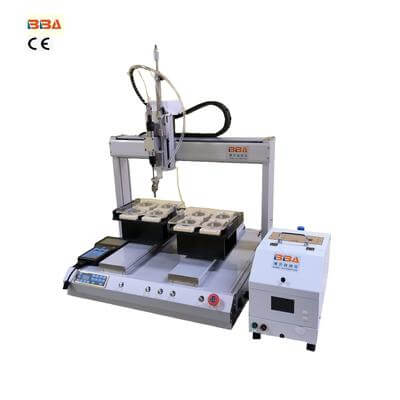
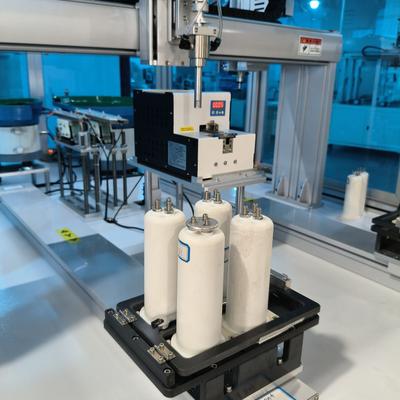
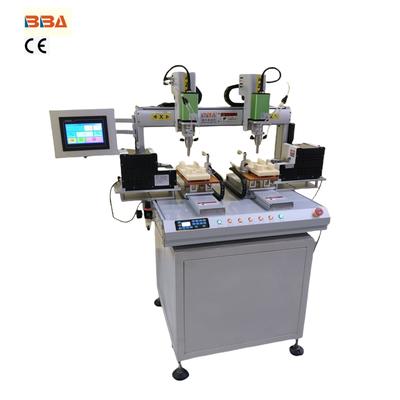
Robotic Screw Tightening Automation Technology | Precision Manufacturing Solutions
In the intricate dance of modern manufacturing, the precise placement and tightening of screws remains a surprisingly common yet critical operation. While seemingly simple, automating this task has presented significant challenges, requiring robots to move beyond simple pre-programmed motions and develop true dexterity and adaptability. This is where the exciting field of teaching robots advanced screw tightening techniques comes into play.
The core challenge lies in the inherent variability of real-world assembly lines. Components shift slightly on the conveyor; screw holes may have minute positional deviations; fasteners themselves can have manufacturing tolerances. Human operators intuitively compensate for these variations using vision, touch, and instant feedback. Equipping robots to handle this complexity involves a sophisticated blend of technologies:
Beyond Pre-Programmed Paths: Fixed automation struggles with deviation. Modern robotic screwdriving necessitates advanced machine vision systems. Cameras, either integrated onto the robot end-effector or strategically positioned cells, precisely locate screw holes, even identifying slight variations. This real-time visual data allows the robot to dynamically adjust its approach path, ensuring the driver bit perfectly aligns with the fastener head before contact, preventing costly cross-threading or damage.
%3C/text%3E%3C/svg%3E)
The Nuance of Touch: Force Sensing & Control: Successful tightening isn't just about alignment; it's about feel. Industrial robots equipped with multi-axis force/torque sensors become incredibly sensitive. These sensors detect the moment the screw makes contact with the surface, initiating the tightening sequence only upon correct seating. Crucially, they dynamically monitor the applied force and torque throughout the tightening cycle. This allows for extremely precise control, preventing over-tightening (which can strip threads or damage components) or under-tightening (which leads to mechanical failure). Adaptive control algorithms can even compensate for variations in material hardness or thread friction.
Process Intelligence & Traceability: Advanced robotic screwdriving transcends mere mechanical action; it incorporates intelligent process control. Closed-loop systems continuously compare actual torque/angle values against the predefined tightness specification during the entire tightening profile. If parameters deviate beyond acceptable limits, the process halts, triggering an immediate error flag. Comprehensive data logging is a fundamental benefit – each screw tightened is associated with detailed process data (peak torque, angle, time-to-torque, etc.), providing invaluable traceability for quality assurance and process optimization. Asset tracking ensures the correct tool is used for each specific type of screw and joint requirement.
System Integration & Pay-off: Ultimately, teaching robots to master screw tightening extends beyond the robot itself. It involves seamless integration with sophisticated programmable screwdrivers or servo spindles, part feeders (vibratory bowls, tape-and-reel systems), robust vision processing hardware, and the overarching PLC or MES driving the assembly line. The payload capacity, precision, and articulation range of the robot must be carefully matched to the demands of the task and the work cell environment.
The benefits of deploying robotic screwdriving systems are compelling. They achieve unmatched levels of consistency and quality, eliminating human fatigue-induced variations. This translates directly into improved product reliability and reduced warranty claims. Human operators are freed from monotonous, potentially ergonomically taxing tasks, allowing them to focus on higher-value activities like supervision, maintenance, and complex assembly tasks requiring uniquely human judgment. Automation significantly increases throughput while ensuring complete process traceability for every single fastener installed.
Mastering robotic screw tightening represents not just an incremental improvement on a manual process, but a fundamental shift toward a smarter, more reliable, and more efficient factory floor. By combining adaptive robotics, intelligent sensing, and integrated control systems, manufacturers can achieve unprecedented levels of precision and quality in their assembly processes.
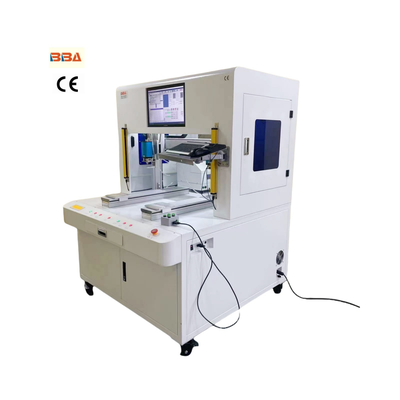
| Product Name | Applicable industries |
| Desktop Screwdriver Robot | LED Lighting Industry |