Automated Screw Fastening Systems for Appliance Manufacturing | Efficiency & Precision
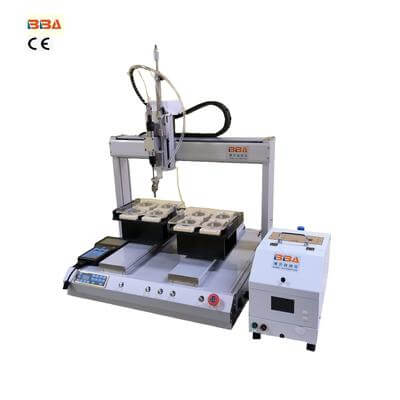
The appliance manufacturing landscape is undergoing a significant transformation, with automated screw fastening systems becoming essential components in assembly lines. These precision-driven solutions streamline the production of refrigerators, washing machines, microwaves, and other household appliances, ensuring consistent quality while optimizing operational efficiency.
Key Advantages for Appliance Production
Automated screw fastening systems deliver multifaceted benefits. Foremost is precision consistency—each fastener receives exact torque specifications, eliminating stripped threads or loose connections that cause failures in the field. This reliability significantly reduces product recalls and warranty costs. Additionally, these systems enhance line efficiency, performing screw insertion in milliseconds—over 50% faster than manual methods—while freeing technicians for more complex tasks. The technology’s ability to log torque data per screw ensures component-level traceability, simplifying defect investigation.
Integrated Workflow Technology
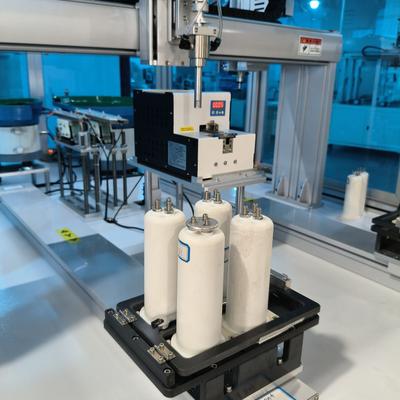
Advanced screw automation integrates seamlessly into appliance assembly lines. Systems deploy vibratory feeders that continuously supply screws directly to electric or pneumatic drivers. Sophisticated sensors monitor each screw's positioning in real-time, while anti-jamming mechanisms prevent line disruptions. For mixed-model production, smart systems automatically adjust torque settings when switching between product variants, such as refrigerator door hinges versus microwave baseplates. Integrated cameras can also perform post-fastening inspections, verifying proper seating and alignment critical for watertight seals, like those in washing machine drums.
Custom Deployment Applications
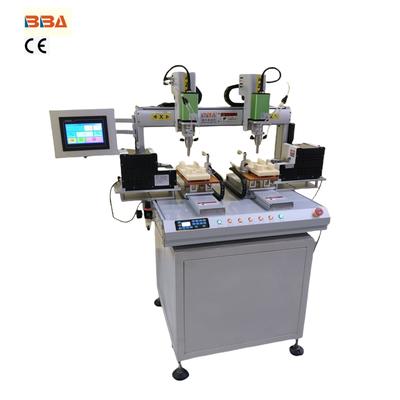
Application versatility defines modern screw automation. For large appliances like refrigerators, multi-spindle units simultaneously fasten door handles, shelf brackets, or compressor mounts. In microwave oven production, compact robotic arms install control-panel screws in confined spaces with micron-level accuracy. Systems designed for washing machine tub assembly drive screws through damping materials while compensating for surface variations. Even complex angles—common when attaching blender motor mounts—are achievable with programmable articulating arms, demonstrating adaptability across more than 60 fastener types found in modern kitchens.
Intelligent Evolution
Emerging advancements are propelling these systems beyond simple fastening. AI-driven algorithms now predict screwdriver maintenance needs by analyzing torque curves and motor vibrations, proactively cutting downtime. IoT connectivity enables remote monitoring of screw inventory levels and performance metrics. Future iterations will utilize computer vision to automatically detect and correct screw-hole misalignments during installation, further minimizing human intervention and elevating quality benchmarks in high-volume factory environments.
Industrial automation delivers indispensable advantages to appliance assembly—bolstered by precision screw technology achieving quality, efficiency, and cost milestones unattainable through conventional approaches. As microwave, dishwasher, and HVAC manufacturing scales globally, this innovation remains vital for building safer, longer-lasting consumer products.
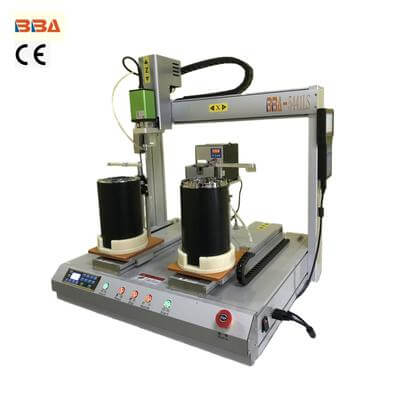
| Product Name | Applicable industries |
| Screw Fastening Unit | Electric Bicycle Assembly |