Servo Motor Control Technology: Key to Enhancing Stability and Efficiency in Industrial Automation
| Product Name | Applicable industries |
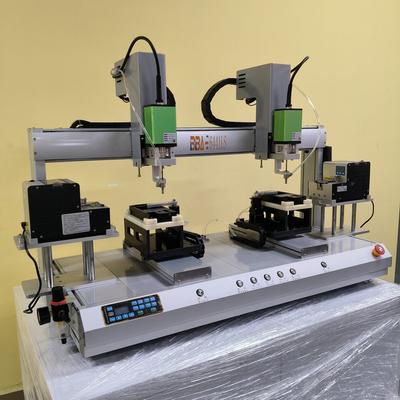
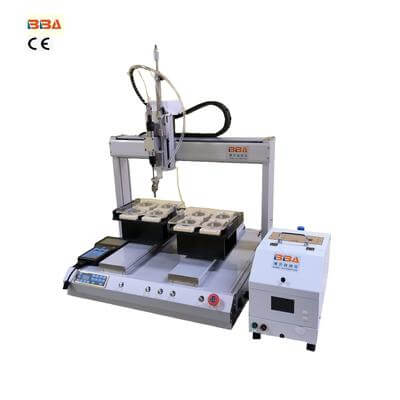
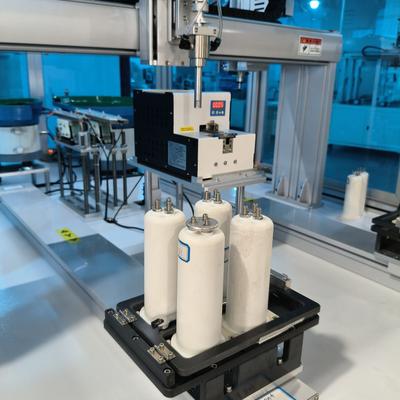
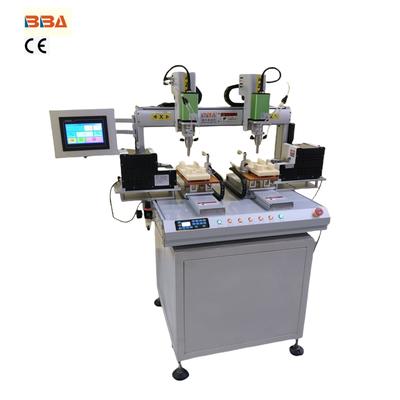
| Auto Screwdriver Machine | Smart Wearables Production |
In modern industrial production, maintaining consistent process stability is paramount. Variations in speed, position, or force can compromise product quality, increase waste, and disrupt entire operations. One technological solution transforming this landscape is servo motor control—a system combining precision engineering with intelligent feedback mechanisms to elevate manufacturing reliability to unprecedented levels.
At its core, servo motor control integrates high-precision motors with real-time feedback sensors and dedicated controllers. Unlike conventional motors, servos continuously monitor performance variables like position, velocity, and torque using encoders or resolvers. This data is instantly processed by the controller, which adjusts power delivery to ensure perfect alignment with predefined parameters. For instance, if a robotic arm deviates from its trajectory during assembly, the controller detects minute discrepancies and compensates within milliseconds. This closed-loop feedback system forms the foundation for stability by enabling self-correction impossible with open-loop alternatives.
The advantages span critical domains in industrial automation. Quality uniformity sees significant gains as repeatable positioning accuracy—measured in micrometers—eliminates dimensional flaws in components. Material handling systems benefit too, where controlled acceleration/deceleration prevents spills or misalignments in high-speed conveyors. Torque precision is equally transformative, especially in applications like injection molding, where maintaining consistent pressure during cavity filling avoids defects. Importantly, minimizing overshooting vibrations reduces mechanical stress, diminishing maintenance demands and prolonging equipment life. The ripple effects include lower scrap rates, heightened throughput, and energy savings due to optimized power consumption.
Consider packaging machinery as a practical example. Gear-driven systems traditionally struggled with jerky motion, causing uneven sealing or labeling errors. Switching to servo controls enabled smooth coordination of cutting, filling, and sealing heads. Adaptive tuning accounted for material thickness variances in real-time, while dynamic speed adjustments ensured zero cross-contamination between product batches—reducing changeover downtime by 40%. Similarly, CNC machining centers using servo axes now hold tighter tolerances, delivering surface finishes that reduce secondary polishing, cutting part production time by over 15% while improving pass rates.
Looking ahead, the convergence with Industry 4.0 solidifies servo technology's role. Predictive algorithms linked to factory-wide IoT networks will anticipate stability risks—preemptively modifying motor behavior as environmental variables change. Embedded diagnostics will autonomously flag wear patterns before failures occur. New motor designs with improved thermal management and torque density promise smaller footprints handling heavier payloads reliably. These innovations point to a future where servo control isn't just an asset but a necessity for competitive, resilient manufacturing ecosystems prioritizing zero-defect output.