Desktop Screw Robots: Boost Productivity in Assembly Automation | Industrial Automation Solution
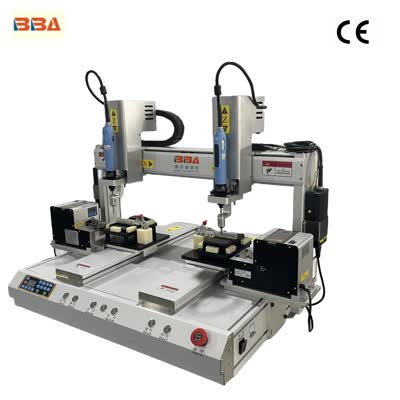
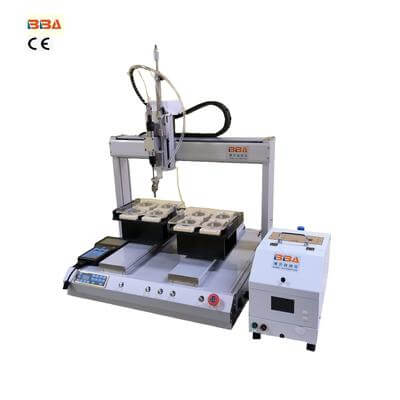
| Product Name | Applicable industries |
| Servo Screwdriver Robot | Telecommunication Equipment Assembly |
How Desktop Screw Robots Increase Productivity
In today's competitive manufacturing landscape, efficiency is paramount. As industries seek solutions to optimize assembly processes, desktop screw robots emerge as game-changing tools for boosting productivity. These compact, table-top systems automate the critical task of screw fastening, delivering tangible benefits that cascade throughout production lines.
Streamlined Operations
Desktop screwdriving robots eliminate manual handling, performing tasks 3-5× faster than human operators. For example, where an employee takes 15 seconds to position and tighten a screw, an automated system completes it in under 5 seconds with consistent force precision. This acceleration reshapes workflows—assembly sequences no longer bottleneck at fastening stages, enabling synchronized production flow at higher throughput.
Zero Tolerance for Errors
Human fatigue leads to cross-threading, stripped screws, or skipped fasteners—all requiring costly rework. Desktop robots eliminate these variables. Programmed with torque specifications (±0.01 Nm accuracy), each cycle replicates perfect consistency. Sensors detect missing screws or imperfect alignment, instantly halting operations to prevent structural compromises. This near-zero defect rate slashes scrap costs by 25-40% while ensuring 100% compliance with quality specifications.
Space-Smart Integration
Unlike bulky automation tools, these systems sit compactly on workstations without demanding infrastructure changes. Their small footprint allows deployment:
- Beside existing assembly lines as supplemental automation
- In confined R&D labs for prototyping
- At multiple stations for parallel processing
With setup times under 3 hours, teams quickly redeploy units between products—ideal for high-mix manufacturing.
Resource Reallocation Impact
Freeing technicians from monotonous screwdriving enables strategic workforce shifts. Employees pivot to:
1. Quality control oversight
2. Complex component assembly
3. System maintenance and programming
4. Continuous improvement initiatives
This redistribution elevates workforce value while reducing ergonomic strain from repetitive tasks. Capital efficiency rises too—ROI typically materializes in <10 months through labor savings and waste reduction.
Scalability Advantage
Desktop robots adapt seamlessly to production scaling. During demand surges, additional modular units deploy immediately without disrupting layouts. For new products, software libraries store fastener profiles—parameters transfer instantly to handle design iterations. Unlike fixed automation, this scalability future-proofs investments across evolving product lifecycles.
The Future-Ready Edge
Integrating AI capabilities propels next-gen screwdriving robots beyond current benchmarks. Machine vision now detects intricate or hard-to-access fastening points once impossible to automate. Predictive analytics from operational data forecast maintenance needs before downtime occurs. IoT connectivity further allows real-time adjustments across global production networks—recalibrating torque parameters continentally based on environmental variables like temperature or humidity.
Conclusion
Desktop screw robots represent micro-automation with macro-impact. By merging precision, flexibility, and intelligent design, they transform screwdriving from a mundane task into a productivity multiplier. Manufacturers adopting these systems consistently report accelerated cycle times, heightened quality, and resources optimized toward innovation—they aren't just automating assembly, but advancing competitive viability.