Multi-Axis Screw System Performance Metrics: Guide to Precision, Load Capacity & Lifespan Optimization | Industrial Automation Technology
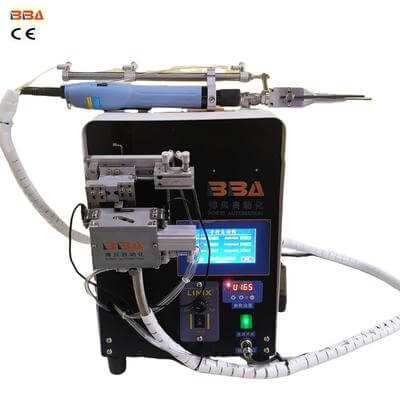
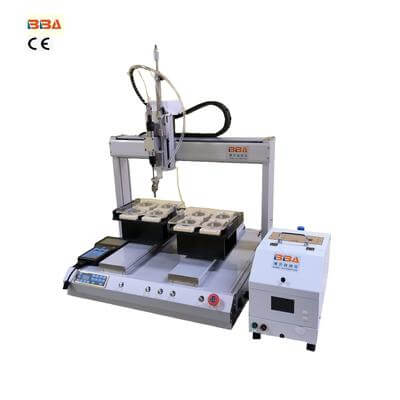
| Product Name | Applicable industries |
| Auto Screwdriver Machine | Consumer Electronics Assembly |
Performance Metrics of Multi-Axis Screw Systems
In industrial automation, multi-axis screw systems form the backbone of precision motion control. These sophisticated assemblies translate rotary motion into linear movement across multiple coordinated axes, enabling complex manufacturing operations in CNC machinery, robotics, and semiconductor production. Understanding their key performance metrics is paramount for optimizing system reliability and output quality.
Critical Performance Indicators
Positioning Accuracy & Repeatability: Fundamental to precision tasks, absolute accuracy measures deviation from target positions, while repeatability quantifies consistency in returning to the same point. High-grade ball screws typically achieve ±5μm accuracy and ±2μm repeatability under controlled conditions.
Dynamic Responsiveness: Defined by maximum velocity (often exceeding 1 m/s) and acceleration/deceleration rates, this determines cycle times. System rigidity directly impacts vibration resistance during rapid directional changes – a critical factor for high-throughput applications.
Load Capacity & Rigidity: Axial static/dynamic load ratings (expressed in kN) establish force limits before deformation occurs. Preload levels in anti-backlash nuts significantly influence stiffness, reducing elastic deflection under lateral forces during multi-axis coordination.
Operational Longevity Metrics
L10 Bearing Life: Calculated based on initial load relative to dynamic capacity, this predicts the distance traveled before 10% of screws exhibit fatigue failure. Premium systems deliver 10,000+ km service life through hardened steel components and optimized recirculation designs.
Efficiency & Thermal Stability: Ball screws achieve 90%+ mechanical efficiency versus 20-30% for lead screws. Power loss manifests as heat, making thermal expansion coefficients vital for environments demanding thermal growth compensation below 5μm/°C.
Optimization Considerations
Selecting ball screw leads involves balancing resolution and speed – finer pitches enhance precision but reduce maximum velocity. Integrated feedback systems compensate for cumulative errors from screw windup or deflection in extended travels. Alignment tolerances below 0.05mm/m prevent premature wear, while advanced sealing solutions maintain lubrication integrity in contaminated environments.
Synchronization performance across axes demands meticulous tolerance stacking control. Backlash must be minimized to under 0.015mm for contouring applications, achieved through double-nut preloading or zero-clearance designs that maintain positional coherence during complex interpolated movements.
Conclusion
Quantifying these parameters through ISO 3408-4 and JIS B1192 standardized testing creates actionable benchmarks for system designers. Proactive monitoring of torque fluctuations and acoustic signatures enables predictive maintenance, extending service intervals by 30-50%. Ultimately, mastering these metrics transforms multi-axis systems from mere mechanical components into strategic assets for achieving micron-level precision and unparalleled manufacturing efficiency.