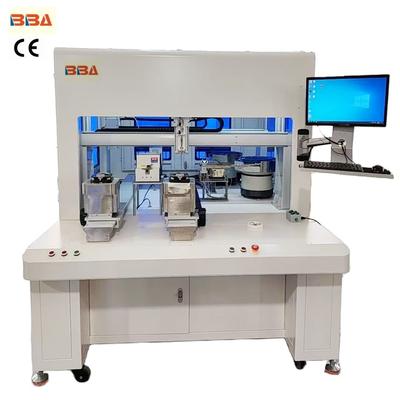
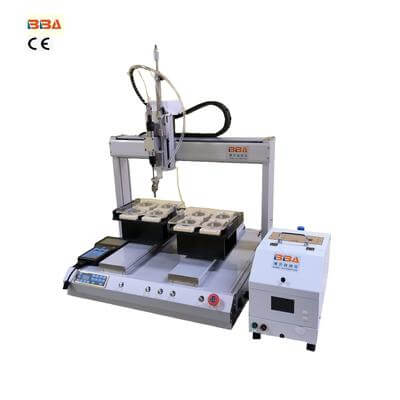
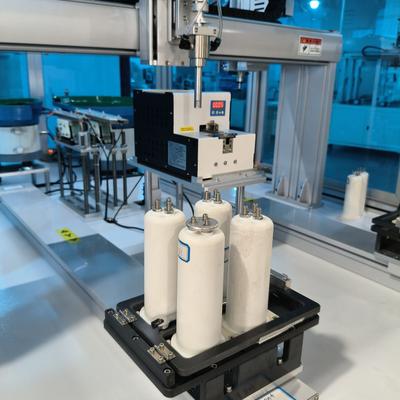
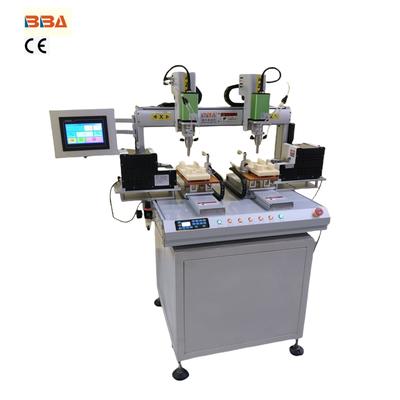
Multi-axis Screw Tightening Machine Selection Guide: Precision Torque Solution for Industrial Assembly Automation
The evolution of industrial assembly demands precision, speed, and reliability like never before. In this landscape, multi-axis screw tightening machines have become indispensable assets, transforming complex fastening operations from potential bottlenecks into streamlined processes. These systems drive production efficiency, ensure consistent quality, and dramatically reduce manual labor costs. However, selecting the ideal machine requires careful consideration of several critical parameters to align with your specific manufacturing needs.
First and foremost, evaluate the required precision and torque control capabilities. Advanced closed-loop torque feedback systems are non-negotiable for applications demanding exact fastener tension, such as in aerospace or medical devices. Look for machines offering programmable torque ranges with minimal deviation (±1-2%) and real-time monitoring to prevent both under-tightening (risking product failure) and over-tightening (causing component damage). Integrated angle monitoring further enhances accuracy for critical joints where rotation matters as much as force.
Next, analyze cycle time requirements against machine speed. Multi-axis configurations excel in simultaneous fastening, but throughput depends on spindle responsiveness and movement coordination. High-speed servos with rapid positioning can shave seconds off each cycle—critical in high-volume sectors like automotive or electronics. Yet speed shouldn’t compromise precision. Machines with collision detection and automatic recalibration maintain pace without sacrificing quality, even during continuous operation.
Flexibility underscores long-term value. Opt for modular designs that adapt to evolving product lines. Features like tool-less changeovers for spindle heads, adjustable fixture compatibility, and software-configurable work sequences allow rapid reconfiguration between jobs. Feed systems must also accommodate varied screw types—poised to switch between M2 micro-fasteners and M10 bolts without downtime. Future-proofing through expandable axis counts or IoT readiness further extends ROI as production scales.
Equally vital is seamless integration with existing workflows. Compatibility with factory communication protocols (EtherCAT, Profinet) ensures the machine synchronizes effortlessly with conveyors, robots, and MES software. Look for vendors offering standardized interfaces and engineering support for synchronization tuning. A compact footprint minimizes floor space disruption while safety integrations like light curtains or emergency stop interoperability align with ISO standards.
Data intelligence capabilities represent a modern imperative. Real-time analytics on torque curves, defect rates, and OEE transform fastening from routine to strategic. Machines logging every fastener create audit trails for compliance and predictive maintenance alerts via dashboard notifications. This traceability not only reduces warranty claims but also identifies process optimizations, turning raw data into actionable insights for quality managers.
The "human factor" remains crucial despite automation. User-friendly HMIs with intuitive programming reduce operator training time and minimize errors. Touchscreen interfaces allowing drag-and-drop sequence setup empower teams to adjust parameters swiftly. Moreover, accessibility for maintenance—such as front-facing components and diagnostic ports—slashes mean-time-to-repair, sustaining uptime.
Choosing the optimal multi-axis screw tightening system ultimately delivers transformative results: boosting line throughput by up to 60%, eliminating human variability in critical joints, and slashing rework costs by ensuring 99.9% defect-free assemblies. Beyond metrics, it builds resilience—future-ready automation that scales alongside innovation. In an era where assembly defines competitiveness, this investment isn’t just practical; it’s foundational to manufacturing excellence.
| Product Name | Applicable industries |
| Dual Head Screwdriver | Medical Device Manufacturing |