Handling Emergency Stops and Safety Protocols in Industrial Automation
Handling Emergency Stops and Safety Protocols
In industrial automation, operational efficiency and productivity goals must never overshadow the fundamental priority: human safety. Emergency stop systems serve as the critical last line of defense when hazardous situations arise unexpectedly. Proper implementation and management of these safety mechanisms—along with comprehensive protocols—form the cornerstone of responsible manufacturing environments.
Understanding Emergency Stop Fundamentals
Emergency stops (E-stops) are purpose-designed safety components that halt machinery operation immediately when activated. Unlike standard stop buttons, E-stops trigger a controlled shutdown sequence using fail-safe principles, overriding all other functions. These devices feature highly visible, palm-operated actuators (typically red on a yellow background) that remain latched until manually reset. Their placement follows strict regulations—easily accessible, unambiguous, and positioned at operator workstations and potential hazard zones.
System Integration and Functional Safety
Effective E-stop systems integrate with broader safety architectures through dedicated channels. Safety relays or safety PLCs monitor E-stop circuits to initiate predefined shutdown sequences. These controllers incorporate redundancy and self-checking mechanisms to detect faults such as welded contacts or wire breaks, maintaining system integrity even in failure scenarios. Compliance with global standards like ISO 13849 and IEC 62061 ensures architectures achieve required Performance Levels (PL) or Safety Integrity Levels (SIL).
Operational Protocols and Human Factors
Technical systems work optimally only when paired with rigorous procedural protocols. Clear documentation must define when and how to use E-stops—typically reserved for imminent danger rather than routine stops. Post-activation lockout procedures prevent accidental restarts while maintenance or troubleshooting occurs. Regular training reinforces correct operator responses, with drills simulating emergency scenarios to build instinctive reactions. Additionally, meticulous material handling around machinery reduces unintentional E-stop triggers, minimizing costly downtime.
Maintenance and Validation Cycles
E-stop functionality degrades without systematic testing and upkeep. Implement monthly inspections verifying mechanical integrity and full-range actuator travel. Biannual validation checks assess electrical continuity, circuit response times, and shutdown completeness. Comprehensive audits should occur annually, examining physical component wear, environmental damage, signage clarity, and integration logic alignment with current risk assessments. Maintenance logs provide traceability and highlight recurring issues needing redesign.
Designing for Evolving Safety Landscapes
Modern manufacturing demands adaptable safety infrastructures. Wireless E-stops expand coverage in large facilities but require cybersecurity safeguards. Integrating E-stop triggers with networked safety systems enables advanced diagnostics—like pinpointing activation locations through HMI mapping. Machine learning algorithms applied to shutdown event logs can identify hazardous operational patterns for preemptive intervention. For legacy equipment, retrofit-enabled modules facilitate upgrades without overhauling control panels.
A layered safety approach combines E-stops with complementary safeguards: presence detection sensors prevent access during hazardous motions, two-hand controls ensure operator positioning, and speed monitoring restricts machinery during maintenance. Every physical or software-based protection must satisfy the Three-Step Safety Method: 1) Identify potential hazards through FMEA, 2) Implement reliable countermeasures using safety-rated components, 3) Verify effectiveness through continuous operator feedback and data analysis.
Critical Consideration: Never compromise E-stop distinctiveness. Colored guards that obscure buttons, misleading labeling, or partially obstructed access create fatal ambiguities in crises.
Beyond Compliance: Building Safety Culture
Ultimately, the most sophisticated systems succeed only with organizational commitment. Transparent incident reporting—without punitive repercussions—encourages hazard disclosure. Empowering operators to pause processes over safety concerns fosters proactive risk mitigation. By integrating E-stops into holistic safety ecosystems through disciplined engineering and human-centered workflows, industrial operations achieve not just regulatory compliance but sustained peace of mind.
Reliable emergency mechanisms transform workplaces, elevating trust and productivity. When each element—from push-button reliability to technician training—executes flawlessly, operations gain resilience without sacrificing progress. In automation, true advancement will always be measured not only in output but in safeguarded wellbeing.
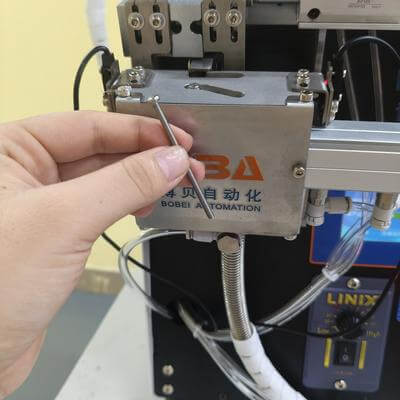
| Product Name | Applicable industries |
| CNC Screw Fastener | Medical Device Manufacturing |