Small Factories Turn to Desktop Screw Robots: Space and Cost Revolution | Automated Assembly Solutions
Why Small Factories Are Switching to Desktop Screw Robots
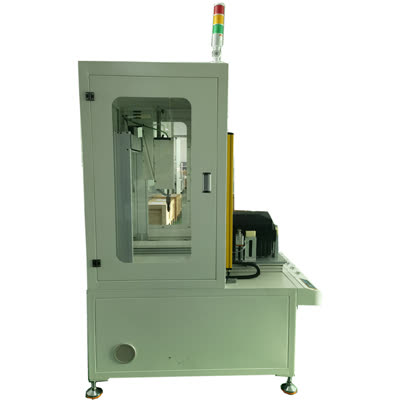
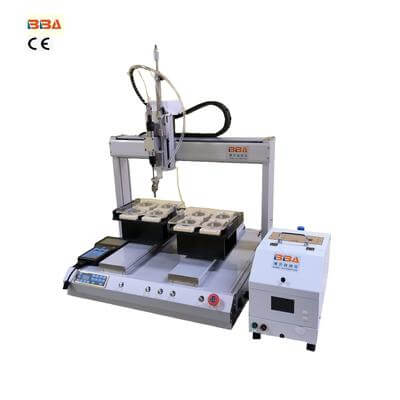
For decades, large manufacturers have leveraged industrial automation to dominate production. But what about the thousands of small factories? Historically priced out of robotics due to cost and complexity, they're now embracing a game-changer: compact desktop screw robots. Designed to fit on workbenches without dedicated floor space, these systems are rewriting the rules for small-batch production.
The Space and Cost Revolution
Traditional screw-driving automation requires massive cells or conveyor integrations—prohibitively expensive for small facilities. Desktop robots eliminate this barrier. With footprints smaller than a toolbox (often under 0.5m²), they slot directly onto assembly tables. One Midwest electronics workshop achieved ROI in just 4 months after deploying two units for circuit board assembly—by cutting manual screw-driving labor by 70% without rearranging their shop floor.
Precision Where It Matters Most
Human fatigue leads to inconsistencies—over-tightening, cross-threading, or missed screws. Desktop robots apply exact torque (±2% accuracy) every time. A study of medical device assemblers found defect rates dropped by 40% after adoption. For high-compliance industries like automotive subcomponents or aerospace parts, this precision prevents costly recalls and reworks.
Agile and User-Friendly Operations
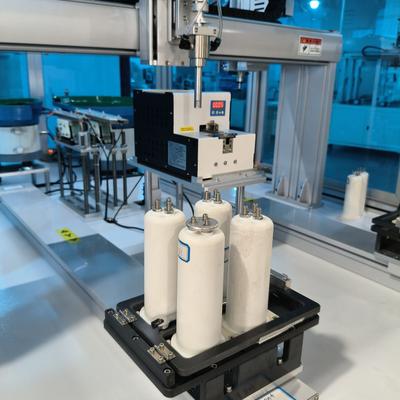
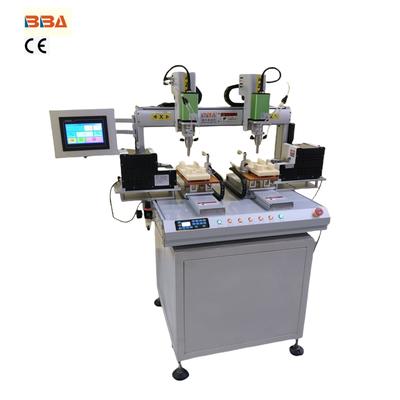
Unlike rigid legacy systems, modern desktop robots feature plug-and-play setups. Intuitive touchscreens let operators switch screw patterns in under 3 minutes—ideal for factories handling custom orders. Vacuum-backed designs accommodate delicate materials like acrylic or carbon fiber without surface damage. Real-time monitoring tools also track every fastener, automating quality logs for audits.
"Before our desktop robot, screw-driving was our bottleneck during peak seasons. Now we handle triple the volume without overtime costs." —Engineer, custom lighting manufacturer
The Hidden Productivity Multiplier
Beyond speed gains, these systems free skilled workers for value-added tasks. A furniture hardware producer redeployed staff from repetitive screwing to CNC operation and finishing, garnishing an output increase. With AI-driven adaptive torque control rolling out, future robots will self-correct for material variances—boosting reliability further.
Democratizing Automation
Subscription models and leases now put desktop robots within reach for workshops with limited capital. Entry-level models startup under $15k—less than 6 months' wages for a manual operator. Integration has never been simpler; most systems work with any jig fixture using standard mounting plates.
For small factories battling labor shortages or margin pressures, desktop screw robots offer a micro-automation lifeline. They prove scalability doesn’t demand square footage—just smart design. As modularity improves, expect these "desktop dynamos" to become as ubiquitous as cordless drills in tomorrow's nimble factory.
| Product Name | Applicable industries |
| Smart Screw Driving Machine | Consumer Electronics Assembly |