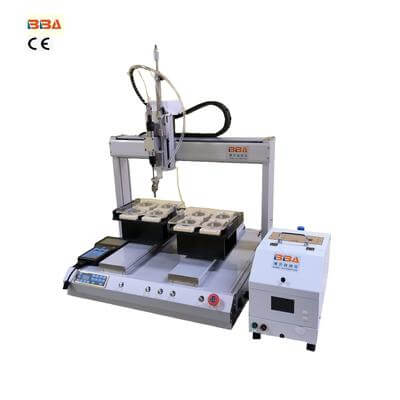
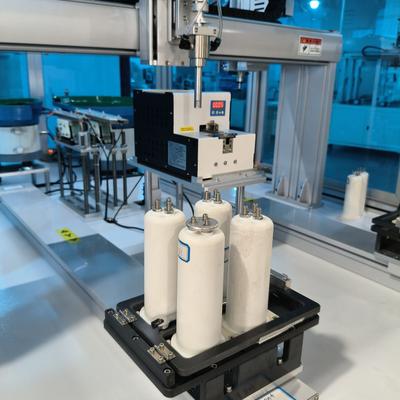
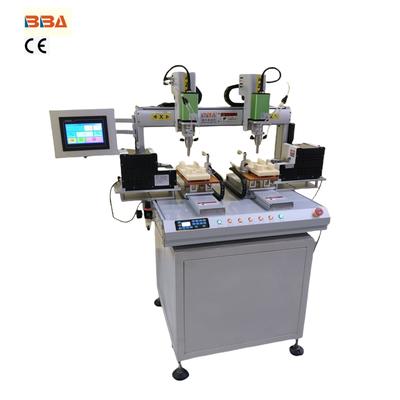
Automatic Screw Feeder Advantages | Industrial Assembly Line Acceleration Solutions | Automated Screw Fastening Systems
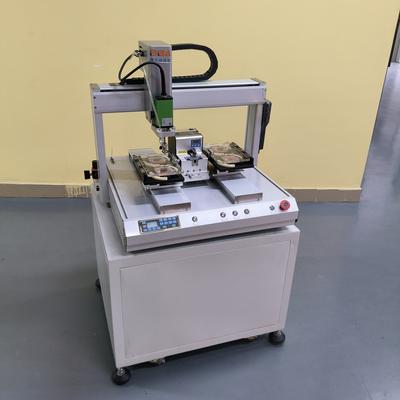
| Product Name | Applicable industries |
| Screw Fastening Unit | Industrial Control Panel Assembly |
Revolutionize Assembly Lines: Time-Saving Advantages of Automatic Screw Feeders
Industrial assembly thrives on efficiency, and few innovations deliver time savings like automatic screw feeders. These precision systems eliminate the laborious manual handling of fasteners—a key bottleneck in production processes. By integrating seamlessly with screwdriving equipment, they transform chaotic workstation bins into orchestrated workflows. The cumulative impact? Faster cycles, measurable throughput gains, and a competitive edge.
Eliminating Manual Handling & Search Time
Traditional screw assembly consumes 15-30% of operator time in picking, aligning, and loading screws. Automatic feeders eradicate this waste by delivering screws directly to the driver nose, oriented and ready for insertion. Operators simply pull the trigger—no fumbling through bulk containers. Reduced physical handling also minimizes fastener contamination from skin oils, maintaining consistent torque performance.
Continuous Operation & Micro-Second Cycle Gains
Unlike manual setups requiring pauses between screws, automated systems ensure a non-stop workflow. High-speed vibratory bowls and centrifugal sorters align screws in milliseconds. Precision-timed gates then release them to feed tracks with zero lag. When amplified across thousands of cycles daily, these micro-efficiencies yield up to 40% faster assembly rates. Dual-track models heighten this advantage, enabling continuous feeding while one track reloads.
Downtime Reduction with Jam Protection
Unexpected stops from jams or misaligned screws cripple productivity. Advanced feeders prevent this with anti-jamming algorithms and vibratory correction. Reversed air blasts clear obstructions while sensors detect missing screws, triggering instant reloading. Optional buffer mechanisms retain hundreds of fasteners during refills. Result: less than 0.5% unscheduled downtime in optimized systems, versus 5-8% with manual processes.
Intelligent Feedback Loops for Adaptive Assembly
Modern feeders synchronize with PLCs and screwdrivers via IO-Link or Ethernet/IP, enabling self-correcting workflows. Counters track screw consumption to low-level alerts, while pressure sensors adjust feed force dynamically. If a screw skips insertion, the driver halts instead of dry-firing. Remote monitoring dashboards quantify these efficiencies—tracking "screws per hour" metrics that reveal hidden delays.
Scalability: Rapid Format Changes
Product changeovers traditionally stall lines. Modular automatic feeders slash transition times with quick-change tooling features. Track attachments swap screw sizes in minutes, while programmable controllers store preset configurations. Flexible feed heads pivot between vertical, horizontal, or angled assembly points without re-engineering—ideal for high-mix production.
Calculating the Cumulative Advantage
Compare line performance: Manual processes average 500 screws/hour with 2 operators. Automated systems reach 1,500-2,000/hour with one operator. Beyond direct labor reduction, secondary savings emerge—less rework from missed screws, lower injury rates from repetitive motions, and decreased screw attrition. ROI typically materializes in 3-9 months.
As Industry 4.0 reshapes manufacturing, real-time synchronized systems like automatic screw feeders aren't just conveniences—they're imperatives. The granular time savings per screw compound exponentially, translating to tangible throughput gains that liberate resources for higher-value tasks. For leaders in industrial automation, integrating these systems represents not merely an upgrade, but a fundamental leap toward waste-free production.