Multi-Spindle Customization in Multi-Axis Systems: Precision & Efficiency
| Product Name | Applicable industries |
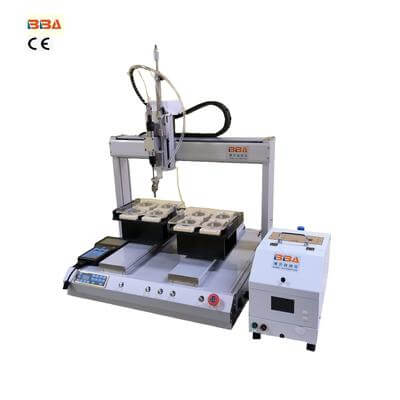
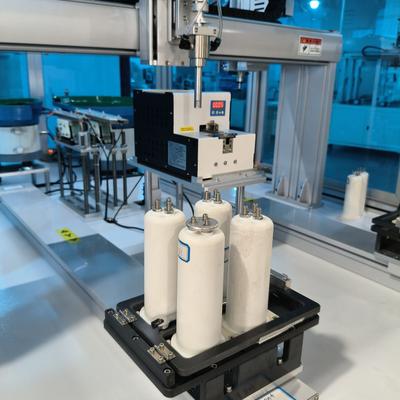
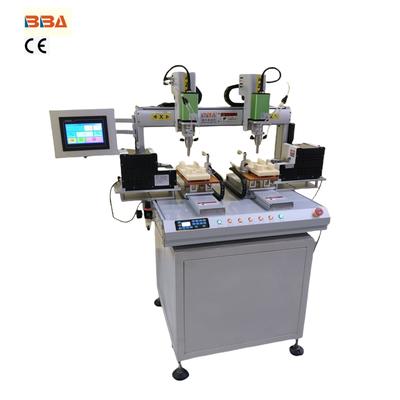
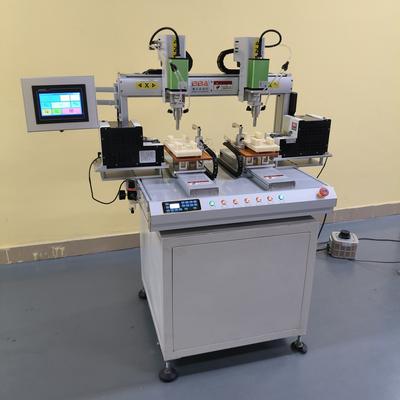
| Smart Screw Driving Machine | Home Appliance Production |
In today's rapidly evolving industrial landscape, the demand for precision, efficiency, and customization in manufacturing processes has never been higher. One of the most significant advancements in this space is the integration of multi-spindle customization in multi-axis systems. This technology is revolutionizing how industries approach complex machining tasks, offering unparalleled flexibility and productivity.
Multi-spindle systems are designed to perform multiple operations simultaneously, drastically reducing cycle times and increasing output. When combined with multi-axis capabilities, these systems can handle intricate geometries and high-precision requirements with ease. The customization aspect allows manufacturers to tailor spindle configurations to specific applications, ensuring optimal performance for diverse production needs.
The advantages of multi-spindle customization in multi-axis systems are numerous. First and foremost, efficiency gains are substantial. By performing multiple operations in a single setup, manufacturers minimize idle time and reduce the risk of errors associated with part repositioning. This leads to faster production cycles and higher throughput, which is critical in high-volume manufacturing environments.
Another key benefit is precision and repeatability. Multi-axis systems enable tooling to approach the workpiece from various angles, ensuring consistent accuracy across complex geometries. Customized spindle configurations further enhance this by allowing tools to be positioned exactly where needed, minimizing deflection and vibration for superior surface finishes.
Industries such as aerospace, automotive, and medical device manufacturing are particularly well-suited to leverage this technology. For example, in aerospace applications, components often require intricate milling, drilling, and threading in hard-to-reach areas. Multi-spindle systems with tailored configurations can address these challenges efficiently, reducing the need for secondary operations and improving overall part quality.
Customization also extends to tooling and automation integration. Advanced multi-spindle systems can be equipped with quick-change tooling, adaptive machining capabilities, and seamless integration with robotic loaders or conveyors. This level of adaptability ensures that manufacturers can future-proof their operations, scaling production up or down as demand fluctuates.
Implementing multi-spindle customization in multi-axis systems does require careful planning. Factors such as spindle power, torque requirements, and thermal stability must be considered to achieve the desired performance. However, the long-term benefits—such as reduced labor costs, improved material utilization, and enhanced competitiveness—far outweigh the initial investment.
As industrial automation continues to advance, the role of multi-spindle and multi-axis technologies will only grow more prominent. Manufacturers that embrace these solutions today will be better positioned to meet the challenges of tomorrow, delivering high-quality products faster and more efficiently than ever before.