Customize Desktop Screw Robots for Precision Assembly | Industrial Automation Solutions
| Product Name | Applicable industries |
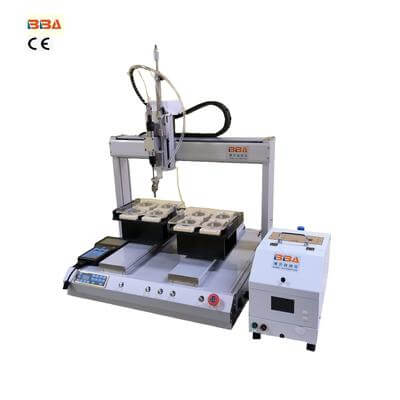
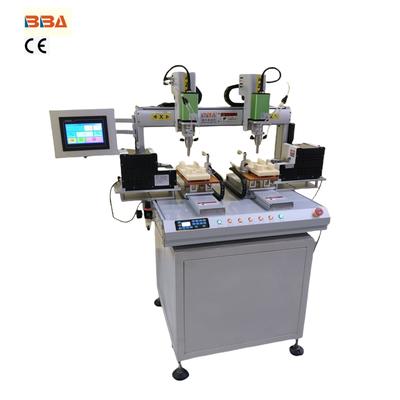
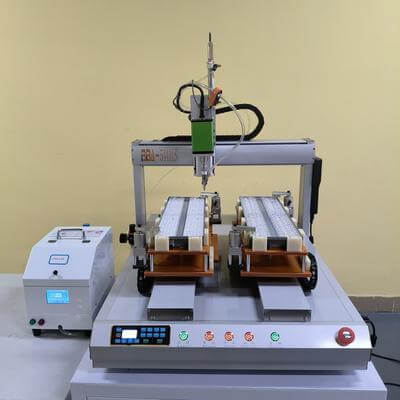
| Screw Locking Robot | Laptop and Tablet Assembly |
In today's fast-evolving industrial landscape, customization is key to staying competitive. For manufacturers seeking precision, efficiency, and flexibility in assembly processes, desktop screw robots offer an ideal solution. These compact yet powerful machines can be tailored to fit specific product requirements, ensuring seamless integration into your production line. Below, we explore how to customize desktop screw robots to meet your unique needs.
1. Assess Your Product Requirements
Before customizing a desktop screw robot, evaluate your product's specifications. Consider factors such as screw size, material, torque requirements, and assembly speed. The robot must align with your production volume and the complexity of the assembly process. For example, delicate electronics may require lower torque, while automotive components might need higher precision and durability.
2. Choose the Right End Effector
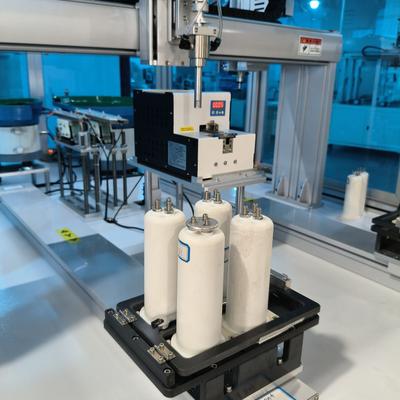
The end effector, or the tool attached to the robot, plays a critical role in screw driving applications. Depending on your product, you may need magnetic, vacuum, or mechanical grippers to handle screws securely. Additionally, specialized bits or adjustable torque drivers can be integrated to accommodate different screw types and prevent damage to sensitive components.
3. Optimize Positioning and Path Planning
Desktop screw robots can be programmed for precise motion paths to match your product's assembly layout. Collaborative robots (cobots) with vision systems can adapt to slight variations in part placement, while fixed robots excel in high-speed, repetitive tasks. Custom fixtures or conveyor systems can further enhance accuracy and throughput.
4. Integrate Smart Features
Modern screw robots can be equipped with sensors and software for real-time monitoring and quality control. Torque feedback ensures consistent fastening, while error detection systems halt operations if a screw is missing or improperly seated. Connectivity options like IoT-enabled diagnostics allow for predictive maintenance, reducing downtime.
5. Test and Iterate
Before full-scale deployment, conduct thorough testing with prototype units. Validate the robot’s performance under real-world conditions and refine the setup as needed. Continuous improvement ensures long-term reliability and maximizes return on investment.
Customizing desktop screw robots for your product streamlines assembly, enhances quality, and boosts productivity. By focusing on precision, adaptability, and smart technology, manufacturers can achieve a seamless automation solution tailored to their unique requirements.