Multi-Axis Tightening Systems for Aerospace Components | Precision Fastening Technology
Multi-Axis Tightening for Aerospace Components
The aerospace industry demands unparalleled precision, reliability, and efficiency in every stage of manufacturing. One critical aspect of this process is the tightening of fasteners in aerospace components, where even the slightest deviation can lead to catastrophic failures. Multi-axis tightening systems have emerged as a game-changer in this field, offering unmatched accuracy and consistency for complex aerospace assemblies.
The Precision Imperative in Aerospace Manufacturing
Aerospace components operate under extreme conditions, including high stress, vibration, and temperature fluctuations. Traditional single-axis tightening methods often fall short of meeting the stringent quality requirements of modern aircraft and spacecraft. Multi-axis tightening systems address this challenge by providing simultaneous control over multiple fastening points with micron-level precision.
These advanced systems can monitor and adjust torque, angle, and sequence in real-time, ensuring uniform load distribution across all joints. This capability is particularly valuable for critical assemblies like engine mounts, wing structures, and flight control systems where perfect symmetry and balance are essential.
Key Advantages of Multi-Axis Tightening Technology
Modern multi-axis tightening solutions offer several significant benefits for aerospace applications:
- Synchronized Tightening: Multiple fasteners can be tightened simultaneously, reducing assembly time while maintaining perfect alignment
- Real-time Monitoring: Continuous feedback ensures each fastener reaches optimal torque and tension levels
- Data Traceability: Comprehensive logging of tightening parameters for quality assurance and regulatory compliance
- Adaptive Control: Automatic adjustments compensate for material variations and environmental factors
Overcoming Complex Assembly Challenges
Aerospace components often feature intricate geometries with hard-to-reach fasteners. Multi-axis systems overcome these challenges with flexible configurations that can adapt to various spatial constraints. Advanced robotics integration allows these systems to navigate complex assemblies while maintaining precise orientation and force application.
The technology also addresses the common issue of joint relaxation, where fasteners can loosen over time due to vibration and thermal cycling. By precisely controlling the tightening sequence and final preload, multi-axis systems create more stable connections that better withstand operational stresses.
The Future of Aerospace Assembly
As aerospace manufacturers pursue lighter materials and more efficient designs, the importance of advanced tightening technologies will only grow. Multi-axis systems are evolving to accommodate new composite materials, hybrid structures, and innovative fastening methods.
Integration with Industry 4.0 technologies is another exciting development. Smart tightening systems can now communicate with factory networks, enabling predictive maintenance, remote monitoring, and continuous process optimization. This digital transformation is helping aerospace manufacturers achieve new levels of quality and productivity.
The adoption of multi-axis tightening technology represents a significant step forward in aerospace manufacturing. By combining precision engineering with intelligent control systems, these solutions are helping to build safer, more reliable aircraft while streamlining production processes and reducing costs.
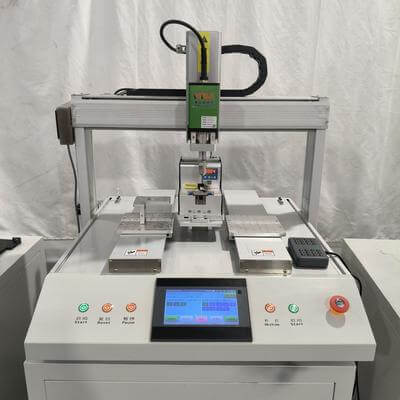
| Product Name | Applicable industries |
| Desktop Screwdriver Robot | Electric Bicycle Assembly |