Collaborative Robots for Flexible Fastening Tasks | Cobot Automation
Collaborative Robots for Flexible Fastening Tasks
The manufacturing landscape is undergoing a profound shift, moving away from rigid, high-volume production lines towards more agile and adaptable systems. In this new era of industry, flexibility is paramount. One of the most critical and often challenging operations to automate in such an environment is fastening—a task that requires precision, consistency, and the ability to handle variety. This is where collaborative robots, or cobots, are emerging as a transformative solution, offering a unique blend of human-like dexterity and robotic endurance.
Redefining Automation in Assembly
Traditional industrial robots, while powerful and fast, are often confined to safety cages, performing the same repetitive task for years on end. They lack the flexibility to quickly adapt to new product designs or varying assembly sequences without significant reprogramming and costly downtime. Collaborative robots break this mold. Designed to work alongside human operators safely without extensive safeguarding, cobots bring automation to the fastening process without sacrificing the agility modern manufacturing demands.
Equipped with advanced force-torque sensors and vision systems, a cobot can mimic the nuanced actions of a human worker. It can locate a screw hole, insert a fastener, and apply the exact required torque with remarkable repeatability. This is crucial for quality control, as under-torquing or over-torquing can lead to product failures. The cobot ensures every single fastener is applied perfectly, every time, drastically reducing error rates and associated rework costs.
The Pillars of Cobot Flexibility
The power of collaborative robots in fastening applications lies in their core attributes:
Ease of Programming and Deployment: Unlike their traditional counterparts, many cobots can be programmed through intuitive methods like hand-guiding or simple graphical interfaces. This allows technicians without specialized robotics expertise to quickly teach the robot new fastening paths or sequences. A line changeover that might have taken days can now be accomplished in hours or even minutes.
Inherent Safety: With force-limited joints and sophisticated sensors, cobots can detect unexpected contact and stop immediately. This allows them to operate safely in close proximity to people, enabling true human-robot collaboration. An operator can easily step in to handle complex sub-assemblies or exception cases while the cobot manages the repetitive fastening work.
Space Efficiency and Mobility: Cobots are typically lightweight and can be mounted on flexible stands or even mobile platforms. This means a single fastening cobot can be deployed at different stations along an assembly line as needed, or easily moved to an entirely different production cell, maximizing its utilization and return on investment.
Unlocking New Potential
The integration of collaborative robotics into fastening tasks is more than just an incremental improvement; it is a strategic enabler. It allows companies to automate processes that were previously considered too variable or complex for robotics. Manufacturers can now cost-effectively produce smaller batch sizes, handle high product mix, and respond swiftly to market changes without compromising on quality or throughput.
By automating ergonomically challenging tasks, cobots also contribute to a healthier and more productive workforce. They take over the repetitive strain of tightening countless fasteners, reducing the risk of work-related musculoskeletal disorders for human employees, who can then be upskilled to more value-added roles such as supervision, quality inspection, and process optimization.
As technology continues to advance, with improvements in AI, machine vision, and end-of-arm tooling, the capabilities of collaborative robots will only expand. They are poised to become the standard for intelligent, flexible, and efficient fastening solutions, forming the backbone of the smart factories of the future. For any manufacturer looking to enhance their assembly operations, the time to explore the potential of collaborative fastening robots is now.
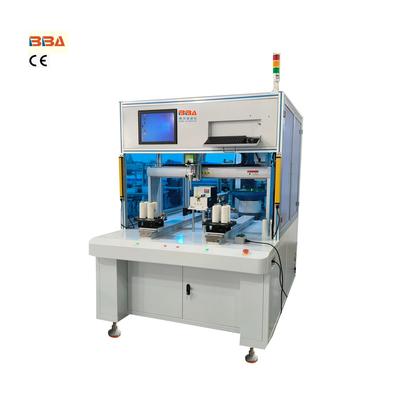
| Product Name | Applicable industries |
| Inline Screw Locking System | Smart Wearables Production |