Multi-Axis Screw Fastening Systems | Automotive Manufacturing Applications
Automotive Applications of Multi-Axis Screw Fastening
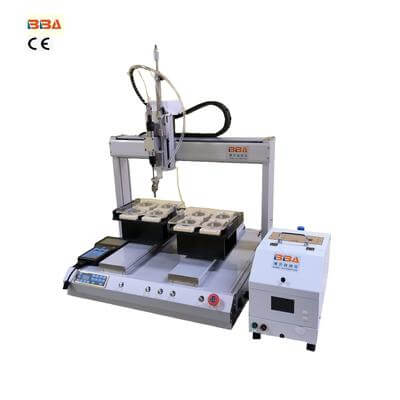
The automotive manufacturing industry is defined by its relentless pursuit of precision, efficiency, and unwavering quality. In this high-stakes environment, every component must be assembled with exacting standards to ensure safety, reliability, and performance. Multi-axis screw fastening systems have emerged as a transformative technology, revolutionizing assembly lines and setting new benchmarks for production excellence. These sophisticated systems are engineered to handle complex fastening tasks with unparalleled speed and accuracy, making them indispensable in modern automotive plants.
Enhanced Precision and Repeatability
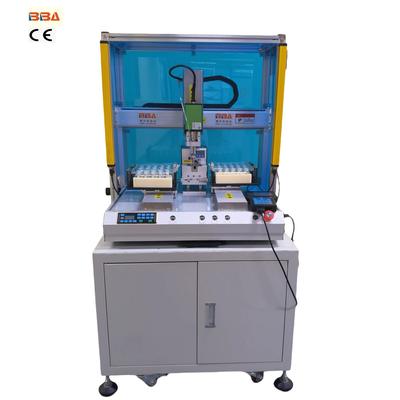
Modern vehicles contain thousands of screws and bolts, each requiring a specific torque and angle to meet stringent engineering specifications. Multi-axis fastening systems utilize advanced servo technology to execute each fastening operation with exceptional precision. They are programmed to deliver exact torque values, monitor angle rotation, and detect cross-threading or stripped screws in real-time. This level of control ensures perfect clamp load every time, which is critical for the structural integrity of components like engine blocks, transmission systems, and brake assemblies. The repeatability of these systems eliminates human error and guarantees consistent quality across every unit produced.
Unmatched Productivity and Flexibility
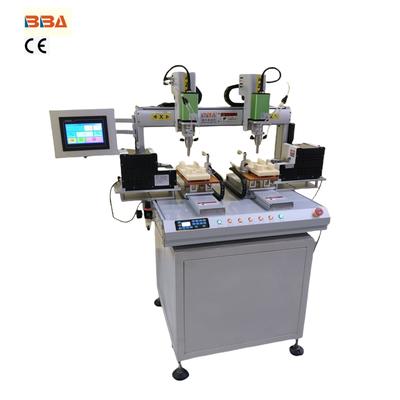
The ability to perform multiple fastening operations simultaneously is the core advantage of multi-axis systems. A single machine can be equipped with several spindles, each independently controlled, to tighten a pattern of screws on a component in a single cycle. This drastically reduces cycle times compared to traditional single-spindle methods. Furthermore, these systems offer remarkable flexibility. Production lines can be quickly reconfigured via software to accommodate different vehicle models or design changes. This agility is vital for manufacturers adopting mixed-model production strategies to meet diverse consumer demands without sacrificing throughput or efficiency.
Critical Applications in Vehicle Assembly
Multi-axis screw fastening technology is deployed across numerous critical stages of automotive assembly:
- Powertrain and Engine Assembly: Precise fastening of cylinder heads, crankshaft bearings, oil pans, and transmission housings is paramount to prevent leaks and ensure optimal performance under extreme pressures and temperatures.
- Chassis and Suspension Systems: Components like steering racks, control arms, and subframes require high-strength fastening to maintain vehicle handling and safety. Multi-axis systems provide the necessary torque accuracy and audit trails for these safety-critical joints.
- Interior and Electronics Modules: From dashboard instruments and airbag systems to infotainment consoles, these delicate components often involve tight spaces and a high number of small fasteners, a task perfectly suited for compact, programmable multi-axis units.
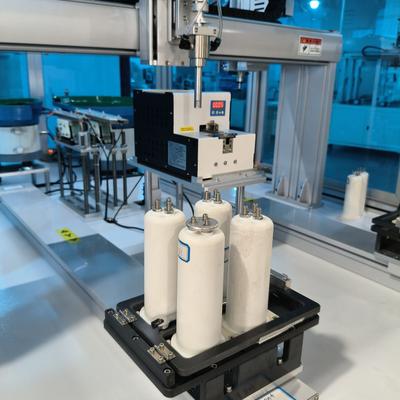
- Electric Vehicle (EV) Battery Pack Assembly: The construction of battery trays and modules demands extreme precision to ensure electrical connectivity, structural rigidity, and seal integrity. Multi-axis systems are ideal for applying the specific sequences and torque values required.
The integration of multi-axis fastening systems often goes hand-in-hand with Industry 4.0 principles. These smart machines are equipped with sensors and connectivity features that generate vast amounts of process data. This data can be analyzed to predict maintenance needs, optimize performance, and provide complete traceability for every fastened joint—a crucial factor for quality audits and recall investigations.
Driving the Future of Automotive Manufacturing
As the automotive industry continues to evolve with advancements in electric and autonomous vehicles, the complexity of assembly will only increase. Multi-axis screw fastening systems represent a foundational technology that provides the scalability, intelligence, and precision required for the next generation of manufacturing. By automating complex fastening processes, manufacturers achieve higher quality levels, reduce operational costs, and enhance their ability to innovate. The continued adoption and refinement of this technology are key to building the safer, more reliable, and technologically advanced vehicles of tomorrow.
| Product Name | Applicable industries |
| Screw Locking Robot | Toy and Game Console Production |