OEM vs Custom-Built Screw Tightening Equipment | Industrial Automation Solutions
OEM vs Custom-Built Screw Tightening Equipment
In the world of industrial automation, precision fastening is a critical process that can define the quality, reliability, and safety of the final product. For manufacturers, selecting the right screw tightening equipment is a pivotal decision. This choice often boils down to two primary paths: purchasing standard Original Equipment Manufacturer (OEM) solutions or investing in custom-built systems. Each approach offers distinct advantages and caters to different operational philosophies and production requirements.
Understanding OEM Screw Tightening Equipment
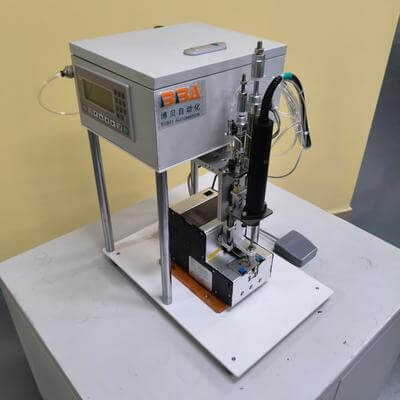
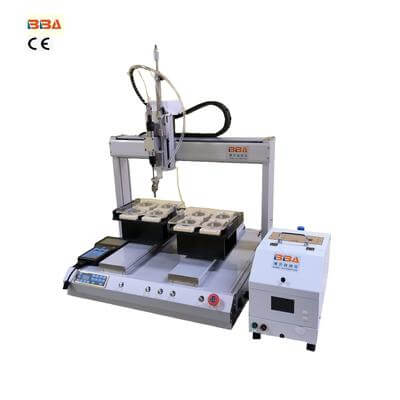
OEM equipment refers to standardized, off-the-shelf machines designed and produced for a broad market. These systems are built to handle common fastening applications and are readily available for purchase and integration.
The primary benefits of choosing an OEM solution include:
- Cost-Effectiveness: Due to mass production, OEM equipment typically has a lower initial investment compared to custom solutions.
- Proven Reliability: These systems have been tested across various industries, offering a known level of performance and reliability.
- Faster Deployment: With availability from stock or short lead times, OEM machines can be deployed on the production line much more quickly.
- Easier Support: Replacement parts, software updates, and technical support are often more streamlined and accessible.
However, the trade-off is limited flexibility. An OEM system might require your process to adapt to the machine's capabilities, which can sometimes lead to compromises in efficiency or ergonomics if your application has unique requirements.
The Case for Custom-Built Solutions
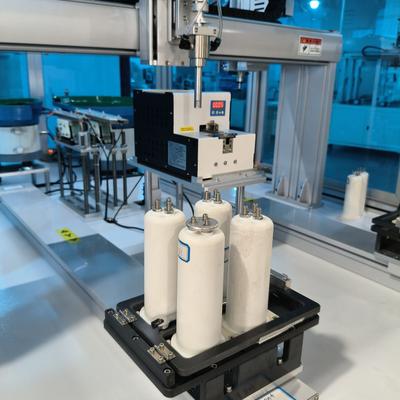
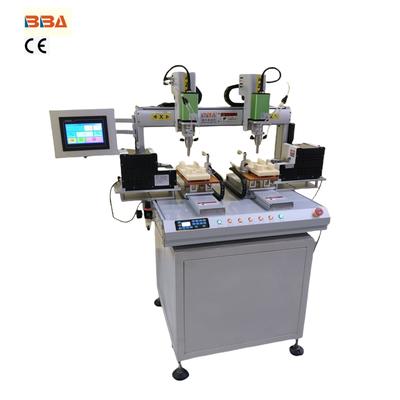
Custom-built screw tightening equipment is engineered from the ground up to address specific application challenges, production line layouts, and unique technical specifications. This path involves a collaborative design process to create a system tailored precisely to your needs.
Investing in a custom solution offers significant advantages:
- Perfect Process Fit: The equipment is designed to integrate seamlessly into your existing workflow, handling exact screw types, torques, angles, and access points without compromise.
- Optimized Performance and Efficiency: Every aspect, from ergonomics to cycle time, can be optimized for your specific task, potentially leading to greater long-term productivity gains.
- Unique Technological Features: Custom builds allow for the incorporation of specialized data tracking, unique tooling, or integration with proprietary software and factory-wide MES (Manufacturing Execution Systems).
- Scalability and Future-Proofing: The system can be designed with future product changes or expansion in mind, providing greater adaptability down the line.
The considerations here are a higher initial cost and a longer development and build time. The project requires a close partnership with the automation provider to ensure the final system meets all expectations.
Making the Right Choice for Your Operation
The decision between OEM and custom-built is not about which is better in absolute terms, but which is right for your specific situation. Ask these key questions to guide your choice:
- How standard or unique is my fastening application?
- Is my production process stable, or is it frequently changing?
- What is the total cost of ownership versus just the initial purchase price?
- Do I require deep data integration and traceability for quality control?
- How critical is maximizing throughput and efficiency for my ROI?
For high-volume, repetitive tasks with standard requirements, a robust OEM solution is often the most practical and economical choice. Conversely, if your operation involves complex assemblies, limited space, unique fasteners, or requires unparalleled data integrity, a custom-built system will likely deliver superior value and performance over its lifespan.
Ultimately, the goal is to achieve flawless fastening quality. By carefully evaluating your technical needs, production goals, and financial constraints, you can select the path—OEM or custom-built—that ensures every screw is tightened to perfection, driving the integrity of your product forward.
| Product Name | Applicable industries |
| CNC Screw Fastener | Smart Wearables Production |