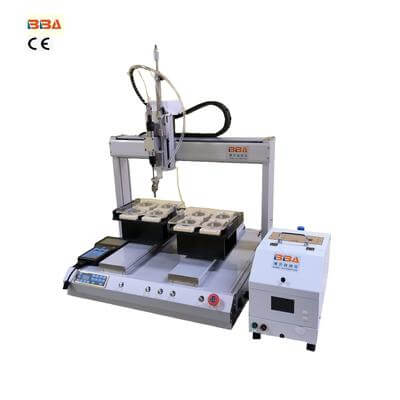
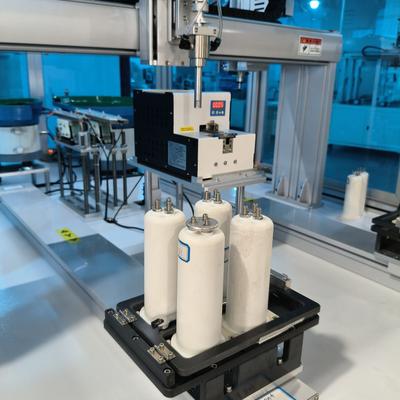
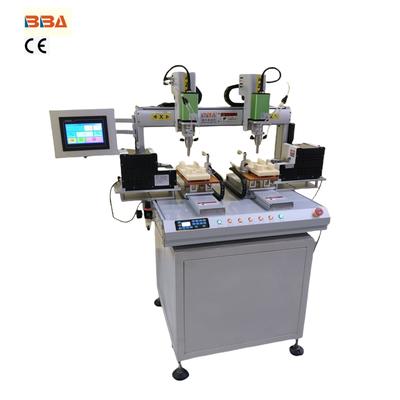
Collaborative Robots for Screw Locking Applications | Industrial Automation
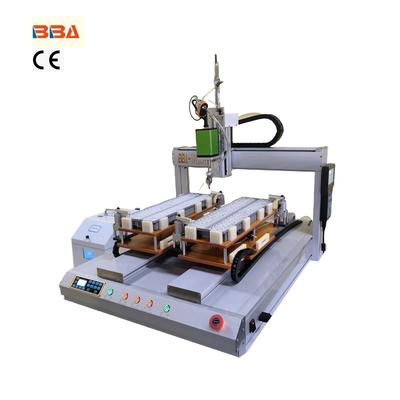
| Product Name | Applicable industries |
| CNC Screw Fastener | Telecommunication Equipment Assembly |
Collaborative Robots and Screw Locking Applications
In the rapidly evolving landscape of industrial automation, collaborative robots have emerged as a transformative technology. These advanced robotic systems are designed to work alongside human operators, enhancing productivity, improving safety, and streamlining complex assembly tasks. One of the most critical and widespread applications for these robots is in screw locking and fastening processes—a fundamental step in countless manufacturing operations.
Traditional screw locking tasks are often repetitive and physically demanding, leading to potential inconsistencies, worker fatigue, and ergonomic challenges. Manual fastening can result in errors such as cross-threading, over-torquing, or under-torquing, which may compromise product quality and reliability. Collaborative robots address these issues by delivering unparalleled precision, repeatability, and efficiency. Equipped with sophisticated vision systems and force-sensing capabilities, these robots can accurately identify fastener locations, adjust to slight variations in part positioning, and apply the exact required torque consistently for every screw.
The integration of collaborative robots into screw locking applications brings significant advantages. Firstly, it drastically reduces the physical strain on human workers, allowing them to focus on more complex and value-added activities. Secondly, it ensures a higher standard of quality control by minimizing human error and maintaining strict adherence to torque specifications. This is particularly vital in industries such as automotive, electronics, and aerospace, where the integrity of every fastener is crucial to the safety and performance of the final product.
Moreover, collaborative robots offer remarkable flexibility. Unlike traditional automated systems that often require dedicated, fixed setups, collaborative robots can be quickly reprogrammed and redeployed for different tasks or product lines. This adaptability makes them ideal for high-mix, low-volume production environments, where manufacturing needs frequently change. With user-friendly programming interfaces, even operators without extensive robotics experience can teach the robot new paths or adjust parameters, significantly reducing downtime and enhancing operational agility.
Safety is another cornerstone of collaborative robotics. Built with advanced sensors and safety-rated software, these robots can operate safely in close proximity to humans without the need for extensive safeguarding. This not only saves valuable floor space but also fosters a more collaborative and efficient workflow. In screw locking applications, where human-robot interaction is common, these safety features ensure that operators can work nearby without risk, assisting the robot when needed or handling exceptional cases.
Looking ahead, the role of collaborative robots in industrial automation is set to expand even further. Continuous advancements in artificial intelligence, machine learning, and sensor technology will empower these systems to take on more complex and nuanced tasks. For screw locking applications, future developments may include even greater autonomy, with robots capable of self-calibration, real-time quality verification, and predictive maintenance, further boosting productivity and reducing operational costs.
In conclusion, the synergy between collaborative robots and screw locking applications represents a significant leap forward in manufacturing technology. By combining human ingenuity with robotic precision and endurance, companies can achieve new levels of efficiency, quality, and flexibility. As this technology continues to mature, it will undoubtedly become an indispensable asset in the modern industrial toolkit, driving innovation and competitiveness across diverse sectors.