Robotic Screw Assembly: Can Robots Replace Humans? | Industrial Automation
| Product Name | Applicable industries |
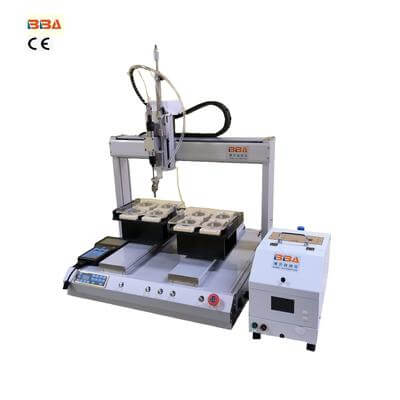
| Servo Screwdriver Robot | Telecommunication Equipment Assembly |
Can Robots Replace Humans in Screw Assembly?
The integration of robotics into manufacturing processes has sparked a compelling debate: can robots truly replace humans in precision tasks like screw assembly? As automation technology advances, industries are increasingly adopting robotic systems for their efficiency, consistency, and ability to operate in challenging environments. However, the question of complete replacement is nuanced and depends on various factors, including technical capabilities, economic considerations, and the evolving role of human workers.
Technical Capabilities of Robotic Screw Assembly
Modern robotic systems excel in repetitive, high-precision tasks. In screw assembly, robots offer unparalleled speed and accuracy. Equipped with advanced vision systems and force sensors, they can detect minute variations in torque and alignment, ensuring each screw is fastened to exact specifications. This reduces the risk of human error, such as cross-threading or under-tightening, which can lead to product failures or safety issues.
Robots also thrive in environments unsuitable for humans, such as extreme temperatures, confined spaces, or sterile conditions required in electronics or medical device manufacturing. Their ability to work continuously without fatigue further enhances productivity, making them ideal for high-volume production lines.
Limitations and Challenges
Despite these advantages, robots face limitations in adaptability and complex problem-solving. Screw assembly tasks often involve unpredictable variables—such as slightly misshapen components or obstructed access points—that require intuitive adjustments. Human operators excel in these situations, leveraging their dexterity and cognitive skills to troubleshoot on the fly.
Moreover, initial setup costs for robotic systems can be prohibitive for small to medium-sized enterprises. Programming and maintenance require specialized expertise, which may not be readily available in all organizations. While robots reduce labor costs over time, the investment in infrastructure and training must be justified by long-term gains.
The Human Role: Collaboration Over Replacement
Rather than outright replacement, the future likely lies in collaboration between humans and robots. Cobots (collaborative robots) are designed to work alongside humans, combining the strengths of both. For instance, a cobot can handle repetitive screw driving tasks, while a human operator manages quality checks, complex assemblies, or exception handling. This synergy maximizes efficiency while preserving the flexibility of human oversight.
Human workers also bring irreplaceable qualities like creativity, critical thinking, and emotional intelligence. They can innovate processes, optimize workflows, and respond to unforeseen challenges—areas where robots still lag. As automation handles mundane tasks, humans can focus on higher-value activities, such as design, supervision, and continuous improvement.
Economic and Social Considerations
The economic impact of automation must be balanced with social responsibility. While robots can boost productivity and reduce costs, their deployment may disrupt traditional labor markets. Companies must invest in reskilling programs to help workers transition to new roles, such as robot programming, maintenance, or system design. This proactive approach ensures that technological advancement benefits both businesses and their employees.
In regions with labor shortages or rising wage pressures, automation can sustain competitiveness. However, in areas with abundant low-cost labor, the business case for full automation may be less compelling. Each organization must evaluate its unique circumstances to determine the optimal balance between human and robotic labor.
Conclusion: A Complementary Future
Robots are transforming screw assembly and countless other industrial processes, but they are unlikely to completely replace humans. Instead, they serve as powerful tools that enhance human capabilities. By automating repetitive and physically demanding tasks, robots free up human workers to focus on innovation, quality assurance, and strategic decision-making.
The most successful implementations will be those that foster collaboration, leveraging the precision of robots and the adaptability of humans. As technology continues to evolve, this partnership will drive manufacturing forward, creating smarter, more efficient, and more resilient production systems.