Automotive Screw Tightening Solutions | Precision Torque Systems
Automotive Industry Solutions for Screw Tightening
The automotive industry is built on precision, reliability, and safety. Every component, from the engine block to the interior trim, must be assembled with exacting standards to ensure vehicle integrity and performance. Among the myriad of assembly processes, one of the most critical yet often underestimated is screw tightening. What might seem like a simple task is, in fact, a complex operation where accuracy is non-negotiable. Inaccurate torque can lead to catastrophic failures, including part loosening, material damage, or even complete assembly recalls. This is where advanced industrial automation solutions for screw tightening become indispensable, providing the technological backbone for modern automotive manufacturing.
The Critical Role of Precision in Screw Tightening
In automotive assembly, not all fasteners are created equal. A screw securing a brake caliper requires vastly different torque specifications than one holding a dashboard panel. Under-torque can result in joints that loosen under vibration—a severe safety hazard. Over-torque can strip threads, deform components, or induce stress fractures that may lead to premature failure. Traditional manual tools or basic pneumatic screwdrivers lack the consistency and data-tracking capabilities needed for high-stakes applications. Modern automated screw tightening systems address these challenges head-on by delivering unparalleled precision, repeatability, and traceability. These systems are engineered to apply exactly the right amount of torque and angle rotation for each specific joint, ensuring every fastener meets its designed clamp load and functional requirements.
Key Features of Advanced Screw Tightening Systems
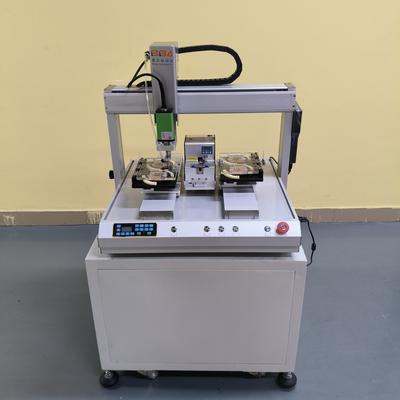
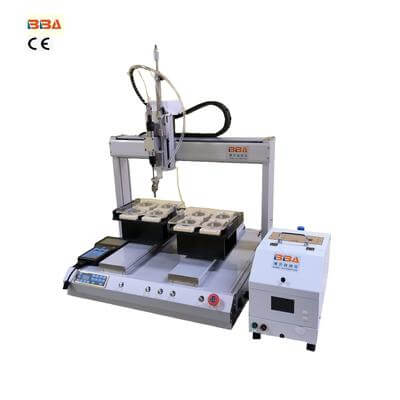
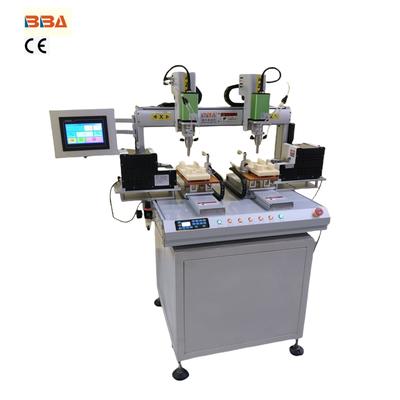
Today’s automated screw tightening solutions are sophisticated mechatronic systems integrated into robotic cells or dedicated assembly stations. They are designed to excel in the demanding environment of automotive production lines.
- Precise Torque and Angle Control: Utilizing servo-driven technology, these systems can control both torque and rotation angle with extreme accuracy, adapting in real-time to material variations and ensuring perfect joint integrity every time.
- 100% Process Traceability: In an industry governed by strict quality standards, data is king. Every tightening operation is logged, recording parameters like final torque, achieved angle, and time. This data is crucial for quality audits and root cause analysis in case of an issue.
- Seamless Integration: These systems are designed for Industry 4.0 smart factories. They can be easily integrated with PLCs, MES (Manufacturing Execution Systems), and factory networks, enabling real-time monitoring and centralized control of the entire assembly process.
- Ergonomics and Efficiency: Automated solutions reduce the physical strain on human workers and significantly increase throughput. Robots can access hard-to-reach areas and perform repetitive tasks with constant speed and accuracy, boosting overall production efficiency.
Applications Across the Automotive Assembly Line
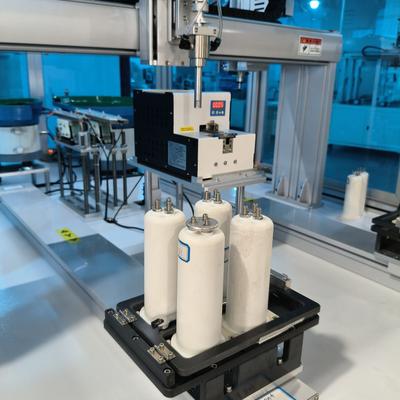
The application of automated screw tightening is vast and touches nearly every part of a vehicle’s construction. In the powertrain department, they are essential for assembling engines and transmissions, where tolerances are exceptionally tight. In the chassis area, they secure critical safety components like steering systems, brake assemblies, and suspension parts. The body-in-white stage relies on them for assembling frames and panels with consistent quality. Even in interior and electronics assembly, where delicate components are involved, precision screwdrivers prevent damage while ensuring a secure fit for infotainment systems, control units, and instrument panels.
Driving the Future of Manufacturing
As the automotive industry evolves towards electric vehicles (EVs) and incorporates more lightweight materials like aluminum and carbon fiber composites, the requirements for joint integrity are changing. EV manufacturing, with its high-voltage batteries and sensitive electronic components, demands even greater precision and error-proofing. Advanced screw tightening systems are at the forefront of this evolution, providing the adaptable, data-driven technology needed to build the next generation of vehicles. By investing in these automated solutions, manufacturers are not just improving quality and safety; they are building a foundation for a more efficient, flexible, and intelligent factory of the future.
| Product Name | Applicable industries |
| Automatic Screw Feeder | Home Appliance Production |