Robotic Screw Driving Accuracy Tips | High-Precision Assembly Systems
| Product Name | Applicable industries |
| Auto Screwdriver Machine | Electric Bicycle Assembly |
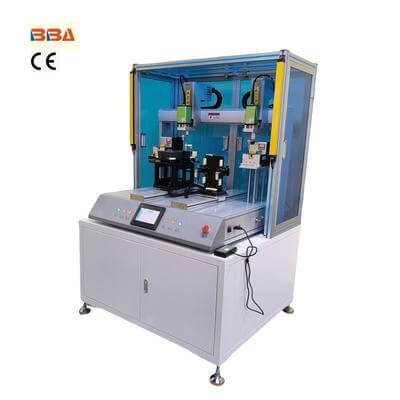
Robotic screw driving systems have become a cornerstone of modern assembly lines, offering unparalleled speed and repeatability. However, achieving and maintaining high accuracy in these systems requires careful attention to several factors. From selecting the right components to implementing smart software strategies, here are essential tips to enhance the precision of your robotic screw driving processes.
One of the most critical elements is the selection of the screwdriver itself. Using a high-quality servo-driven screwdriver provides superior control over torque and angle, which is fundamental for consistency. These tools allow for precise adjustments and real-time monitoring, ensuring each screw is driven to exact specifications. Complementing this with a well-designed screw feeding system is equally important. Reliable feeders minimize jams and ensure correct orientation, reducing errors and downtime. Regular maintenance of these components is also key to long-term accuracy.
The integration of advanced vision systems can significantly boost accuracy. Cameras mounted on the robot or near the end-effector can precisely locate screw holes and guide the driver into position, compensating for any minor misalignments in parts or fixtures. This is particularly valuable in applications with tight tolerances or complex geometries. Force sensors add another layer of precision by providing feedback on the downward pressure applied during the driving process. This helps prevent issues like cross-threading or damaged screw heads by allowing the robot to adapt its approach in real-time.
Software plays a pivotal role in enhancing accuracy. Modern robotic controllers can store and analyze data from each fastening operation. Implementing closed-loop control systems allows for immediate correction if a screw does not meet the predefined torque or angle parameters. This data can be used for traceability and process optimization, helping to identify trends and prevent future errors. Furthermore, ensuring that the robot's path is programmed with smooth and precise movements minimizes vibrations that could dislodge a screw or misalign the tool.
Finally, environmental factors and the quality of fasteners themselves should not be overlooked. Consistent lighting improves the performance of vision systems, while stable temperatures prevent thermal expansion that might affect part fit. Using high-quality screws with uniform thread and head design reduces variability. By addressing these mechanical, sensory, and software aspects holistically, manufacturers can achieve exceptional accuracy and reliability in their automated screw driving applications, leading to higher product quality and reduced waste.