Robotic Servo Screw Systems | Precision Automated Fastening
Combining Servo Screw Systems with Robotics
The landscape of industrial automation is continuously evolving, driven by the need for greater precision, efficiency, and flexibility in manufacturing processes. One of the most impactful advancements has been the strategic integration of advanced servo screw driving systems with industrial robotics. This powerful combination is redefining assembly and fastening applications, creating a new standard for intelligent, high-speed, and adaptable automation solutions.
The Power of Precision and Control
Servo screw driving systems represent a significant leap forward from traditional pneumatic or DC screwdrivers. By utilizing servo motor technology, these systems provide unparalleled control over every critical aspect of the fastening process. Parameters such as torque, angle, speed, and rotation can be meticulously programmed and monitored in real-time. This ensures that every screw is driven with absolute consistency, eliminating the risks of cross-threading, under-torquing, or over-torquing. The result is a drastic reduction in product defects, improved joint integrity, and the generation of valuable data for traceability and quality assurance.
Unlocking New Potential with Robotic Integration
While powerful on their own, servo screw systems truly reach their full potential when mounted onto industrial robots. This integration merges the precise control of the screwdriver with the dexterity, reach, and flexibility of a robotic arm. Robots can be programmed to perform complex sequences of fastening operations across multiple workpieces, accessing tight or awkward angles that are challenging for human operators or fixed automation. This synergy enables manufacturers to automate intricate assembly tasks that were previously considered too complex or variable.
The fusion of a servo screw system with a multi-axis robot creates an intelligent fastening cell capable of self-correction, adaptive sequencing, and seamless integration into a larger smart factory ecosystem.
Key Benefits for Modern Manufacturing
The combined solution offers a compelling array of benefits that address the core challenges in modern industrial production:
- Enhanced Flexibility: Robotic cells can be quickly reprogrammed and equipped with different tools to handle new product variants or assembly lines, drastically reducing changeover time and supporting high-mix production.
- Superior Quality Assurance: Every fastening operation is logged with a complete data record (torque-angle curve, final torque, etc.), providing full traceability for each assembled product and enabling real-time pass/fail judgment.
- Increased Productivity: Robots work tirelessly at high speeds with consistent accuracy, significantly increasing throughput and reducing cycle times compared to manual operations.
- Reduced Operational Costs: Automation of precise fastening tasks minimizes human error, reduces scrap and rework costs, and optimizes the consumption of consumables like screws.
- Ergonomic Improvement: Automating repetitive and strenuous screw-driving tasks removes workers from potentially monotonous or ergonomically unsound roles, improving workplace safety.
Applications Across Industries
This technology is versatile and finds critical applications across numerous sectors. In the electronics industry, it is essential for assembling sensitive devices like smartphones, laptops, and circuit boards where precision is non-negotiable. The automotive industry utilizes these systems for assembling interior components, dashboards, and electronic modules. Additionally, industries such as aerospace, medical device manufacturing, and appliance assembly rely on this combination for its reliability and data-rich results.
The Future of Automated Assembly
The integration of servo screw driving systems with robotics is more than just an incremental improvement; it is a foundational shift towards smarter, more connected, and more agile manufacturing. As robotics become more advanced with better vision systems and force-sensing capabilities, and as servo technology becomes even more precise, the potential for fully autonomous, self-optimizing assembly cells will become the norm. This continued evolution promises to unlock new levels of quality, efficiency, and innovation in industrial automation, empowering manufacturers to meet the demands of the future.
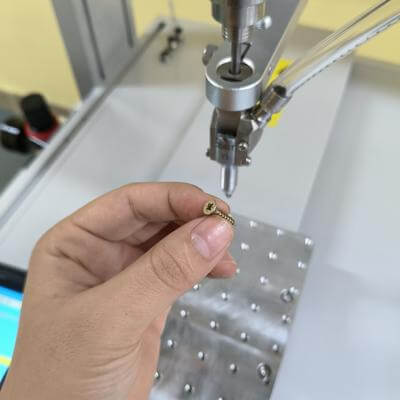
| Product Name | Applicable industries |
| Screw Fastening Unit | LED Lighting Industry |