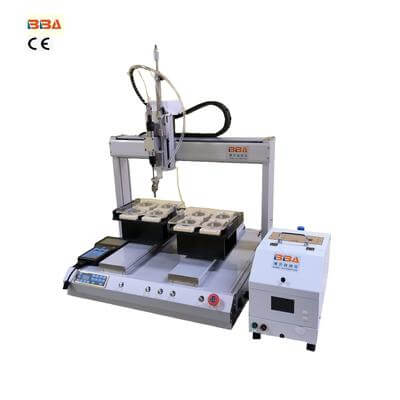
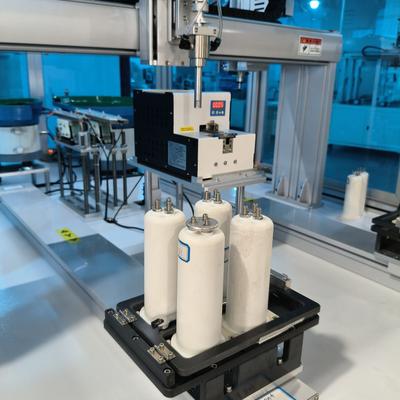
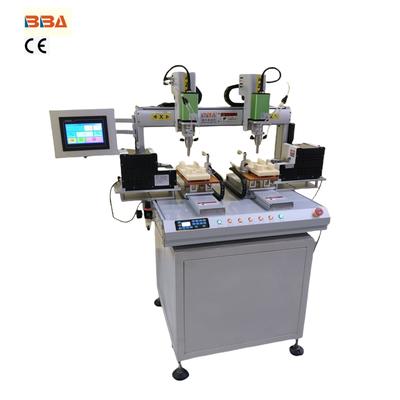
Real-Time Feedback Screwdriving Systems | Automated Fastening Accuracy
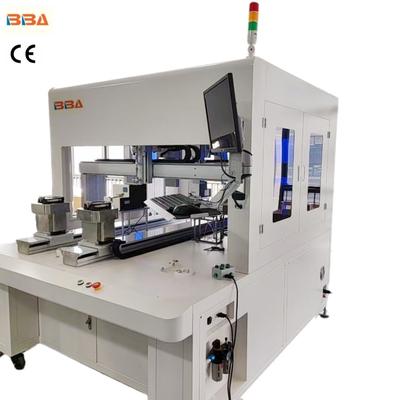
How Real-Time Feedback Improves Screw Accuracy
In the world of industrial automation, precision is not just a desirable attribute—it is an absolute necessity. The accuracy of fastening operations, particularly screwdriving, is a critical factor that directly impacts product quality, assembly line efficiency, and overall manufacturing costs. Traditionally, achieving this precision relied on pre-programmed systems operating in an open-loop manner, without verification. However, the advent of real-time feedback technology has revolutionized this process, introducing a new era of control, consistency, and intelligence to assembly lines.
The Limitations of Traditional Open-Loop Systems
Conventional automated screwdriving systems operate on a simple principle: they are programmed to drive a screw to a predetermined torque or angle. Once the cycle is complete, the task is assumed to be finished correctly. This open-loop approach lacks any mechanism to verify the actual outcome. Consequently, it is vulnerable to a host of issues that can compromise product integrity. A cross-threaded screw, a stripped thread, a missing screw, or even a slightly misaligned driver bit can go entirely undetected. These errors often manifest later in the production process as product failures, leading to costly rework, scrap, and potential field returns that damage brand reputation.
The Power of Real-Time Data Acquisition
Real-time feedback systems transform this process by closing the loop. Advanced controllers equipped with sophisticated sensors continuously monitor key parameters throughout the entire fastening cycle. This includes the precise torque being applied, the rotational angle of the driver, the speed of operation, and even the time taken to complete the task. This constant stream of data is instantly analyzed by the system's processor, creating a dynamic and accurate digital fingerprint for every single screw fastening operation.
Immediate Process Correction and Error Prevention
The true value of real-time feedback lies in its ability to act immediately. The system is not merely recording data; it is actively comparing it against a predefined window of acceptable values, often referred to as a "torque-angle signature" or a process window. If the live data deviates from this acceptable path—for instance, if the torque spikes too early indicating a cross-thread, or fails to reach its target value indicating a potential stripped head—the controller can instantaneously halt the process. This immediate intervention prevents the driver from completing a defective fasten, stopping the error at the source. The operator or the higher-level control system is then alerted to the specific fault, allowing for quick resolution before multiple defective units are produced.
Benefits Beyond Quality Assurance
While the dramatic improvement in quality control is the most evident advantage, the benefits of real-time feedback extend much further:
- Enhanced Traceability: Every fastening operation is logged with its complete set of data. This creates an invaluable audit trail for quality assurance, allowing manufacturers to trace any issue back to a specific unit, time, and even a specific fastener on the assembly line.
- Predictive Maintenance: By analyzing trends in the data over time, the system can detect gradual changes that signal equipment wear. For example, a slowly increasing time-to-torque might indicate that a driver is becoming dull or that a clutch is wearing out, enabling maintenance to be scheduled before a catastrophic failure occurs.
- Process Optimization: The vast amount of data collected provides deep insights into the assembly process. Engineers can analyze this information to fine-tune parameters, reduce cycle times, and further optimize the entire line for maximum efficiency and reliability.
In conclusion, the integration of real-time feedback into screwdriving applications marks a significant leap forward in industrial automation. It replaces assumption with certainty, and reactive correction with proactive prevention. For any manufacturer striving for zero-defect production, maximized efficiency, and complete process control, leveraging this technology is an essential step towards building the smart factory of the future.
| Product Name | Applicable industries |
| Smart Screw Driving Machine | Medical Device Manufacturing |