Precision Automation in Mobile Device Manufacturing | Advanced Tightening Solutions for Electronics Assembly
Revolutionizing Mobile Device Assembly Through Precision Automation
The manufacturing landscape for mobile devices has undergone a seismic shift with the integration of advanced tightening automation systems. These intelligent solutions combine robotic precision with real-time data analytics to create assembly processes that outperform traditional methods in speed, consistency, and quality control.
Modern tightening systems employ multi-axis robotic arms equipped with smart torque controllers that automatically adjust to different screw types and material properties. The integration of vision-guided positioning ensures components align within micrometer tolerances before fastening operations begin, effectively eliminating human error in component placement.
A key advancement lies in self-calibrating torque drivers that maintain optimal rotational force throughout production cycles. These systems continuously monitor variables including thread resistance, material compression, and thermal expansion coefficients, automatically compensating for any deviations detected during the fastening process.
Data integration forms the backbone of modern assembly automation. Each tightening operation generates detailed performance metrics including torque curves, angular displacement measurements, and completion times. This data stream enables predictive maintenance by identifying tool wear patterns and potential mechanical issues before they impact production quality.
The transition to automated tightening solutions brings measurable production advantages. Manufacturers report 40-60% reductions in assembly cycle times coupled with 99.98% fastener consistency rates. Automated error-proofing mechanisms prevent common assembly faults such as cross-threading, under-torque, and component misalignment that frequently occur in manual operations.
Adaptive control systems enable rapid product changeovers through digital recipe management. Production lines can switch between device models in minutes by automatically adjusting torque parameters, tool configurations, and component positioning coordinates stored in centralized databases.
Quality assurance has evolved through automated tightening verification protocols. Each completed assembly undergoes instantaneous torque validation checks against digital twins of the product design. Statistical process control algorithms analyze production data across multiple batches to identify and correct microscopic process variations.
The latest generation of automation systems incorporates machine learning capabilities that optimize tightening parameters in real-time. These adaptive controllers analyze historical performance data and environmental conditions to dynamically adjust torque profiles, achieving continuous improvement in assembly precision without human intervention.
As mobile devices continue to shrink in size while increasing in complexity, automated tightening solutions provide the necessary precision to handle microscopic fasteners and delicate components. The technology supports assembly of advanced materials including magnesium alloys, reinforced polymers, and composite substrates that require specialized fastening protocols.
This automation revolution extends beyond the production floor, enabling complete traceability through digital thread integration. Each device's assembly history - including individual fastener torque values and quality control metrics - becomes part of a permanent digital record accessible throughout the product lifecycle.
The implementation of intelligent tightening automation represents a fundamental transformation in mobile device manufacturing. By merging mechanical precision with digital intelligence, manufacturers achieve unprecedented levels of production efficiency while meeting the exacting quality standards required in modern consumer electronics.
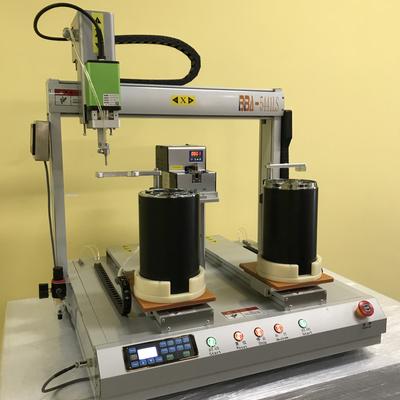
| Product Name | Applicable industries |
| Auto Screwdriver Machine | Telecommunication Equipment Assembly |