**Statistical Quality Control with Multi-Axis Systems: Revolutionizing Precision in Industrial Automation**
In the rapidly evolving landscape of industrial automation, the integration of statistical quality control (SQC) with multi-axis systems has emerged as a transformative approach to achieving precision, efficiency, and consistency in manufacturing processes. By leveraging advanced data analytics and multi-dimensional motion control, industries can now monitor, analyze, and optimize production workflows with unprecedented accuracy. This synergy not only minimizes defects but also enhances operational agility in high-stakes environments.
**The Role of Statistical Quality Control in Modern Manufacturing**
Statistical quality control is a data-driven methodology that uses statistical techniques to monitor and control production processes. By collecting and analyzing real-time data, SQC identifies variations in manufacturing outputs, enabling engineers to address deviations before they escalate into costly defects. Traditional SQC tools, such as control charts and process capability analyses, have long been staples in industries ranging from automotive to electronics. However, the complexity of modern manufacturing—with its demand for tighter tolerances and faster cycle times—requires a more dynamic approach.
**Multi-Axis Systems: Precision in Motion**
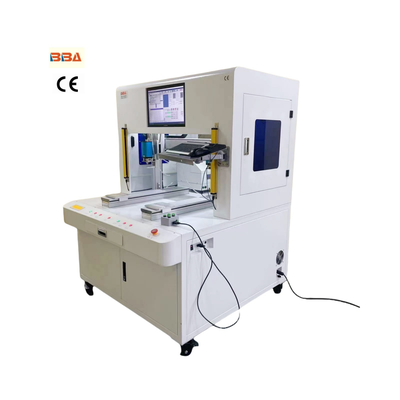
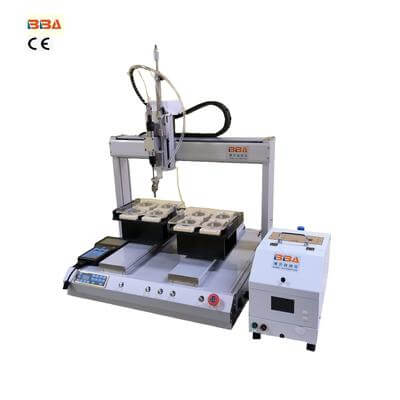
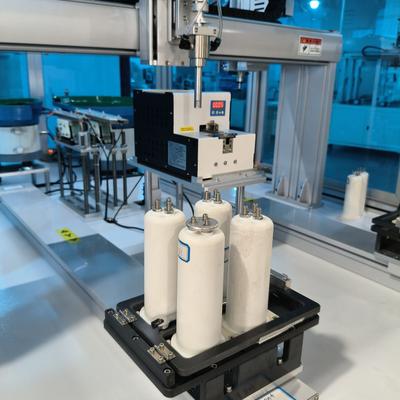
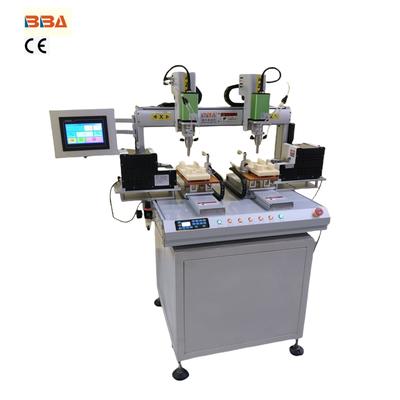
Multi-axis systems, which control movement across multiple spatial dimensions (e.g., XYZ axes, rotational axes), are critical in applications requiring intricate motion patterns. These systems are widely used in CNC machining, robotics, 3D printing, and semiconductor manufacturing. By coordinating movements across axes, they enable the production of complex geometries with micron-level precision. However, maintaining consistency in such systems demands real-time feedback and adaptive control—a challenge that traditional SQC methods alone cannot fully address.
**Converging SQC and Multi-Axis Control**
The fusion of SQC with multi-axis systems creates a closed-loop framework where data analytics and motion control work in tandem. Here’s how this integration drives innovation:
1. **Real-Time Data Acquisition**
Sensors embedded within multi-axis systems collect data on parameters such as positional accuracy, velocity, and torque. This data is streamed to analytics platforms, where statistical models evaluate process stability. For example, a CNC machine equipped with vibration sensors can detect anomalies in tool wear, triggering adjustments to machining parameters before part quality is compromised.
2. **Predictive Maintenance**
By applying SQC techniques to historical and real-time data, manufacturers can predict equipment failures. Multi-axis systems benefit from this approach by scheduling maintenance based on actual usage patterns rather than fixed intervals. A robotic arm’s motor, for instance, might show gradual deviations in angular positioning; SQC algorithms flag these trends early, reducing unplanned downtime.
3. **Adaptive Process Optimization**
Multi-axis systems often operate in dynamic environments where variables like material properties or ambient temperature fluctuate. Integrating SQC allows these systems to autonomously adjust control parameters. In a 3D printing application, real-time analysis of layer adhesion strength could prompt adjustments to nozzle temperature or print speed, ensuring consistent product quality.
4. **Reduction of Variability**
Variability in multi-axis processes—whether due to mechanical wear or environmental factors—directly impacts product quality. SQC tools like hypothesis testing and regression analysis identify root causes of variation. For example, a manufacturer might use design of experiments (DoE) to determine how changes in axis acceleration affect surface finish in metal parts.
**Case Study: Enhancing Aerospace Component Manufacturing**
Consider the production of turbine blades for jet engines, where dimensional accuracy is critical. A multi-axis machining center equipped with SQC capabilities monitors toolpath deviations during high-speed milling. Statistical models analyze positional data from each axis, detecting micro-level tool deflection caused by thermal expansion. The system automatically compensates for these deviations, ensuring that each blade adheres to strict tolerances. Over time, the accumulated data refines the machining parameters, reducing scrap rates by 22% and cycle times by 15%.
**Future Directions: AI and Edge Computing**
The next frontier lies in combining SQC with artificial intelligence (AI) and edge computing. Machine learning algorithms can process vast datasets from multi-axis systems to uncover hidden patterns, enabling predictive quality control. Edge devices, deployed directly on factory floors, will facilitate real-time decision-making without latency. Imagine a robotic welding system that uses AI to adapt weld paths based on real-time metallurgical data, all while SQC algorithms validate each weld’s integrity within milliseconds.
**Conclusion**
The marriage of statistical quality control and multi-axis systems represents a paradigm shift in industrial automation. By embedding intelligence into motion control, manufacturers achieve not only higher-quality outputs but also greater adaptability in an era of customization and rapid technological change. As industries continue to embrace Industry 4.0 principles, this integration will remain a cornerstone of competitive advantage—transforming raw materials into precision-engineered products with unmatched efficiency.