Automatic Screw Machine: Enhancing Industrial Efficiency & Eco-Friendly Manufacturing
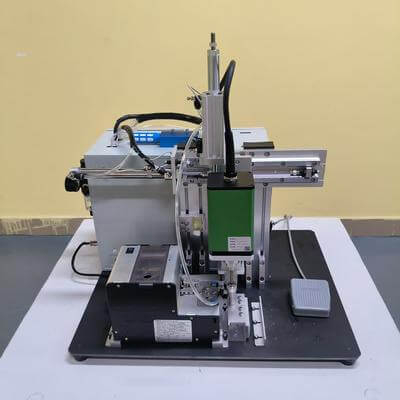
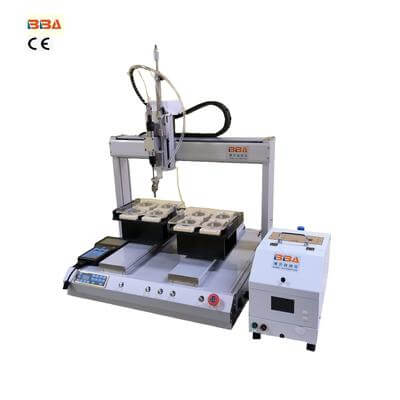
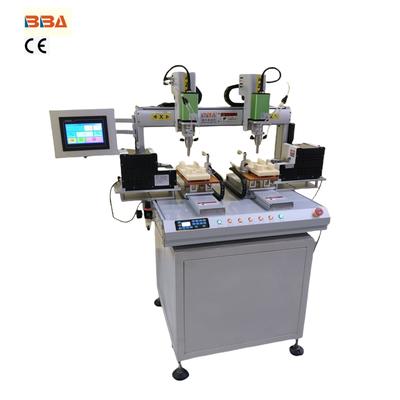
| Product Name | Applicable Industry |
| Automatic Screw Feeder | Home Appliance Production |
In an era where sustainability and efficiency drive industrial innovation, automated screw fastening systems have emerged as a transformative solution for manufacturers. Beyond their operational advantages, these systems play a pivotal role in reducing environmental footprints across production lines. Explore how this technology contributes to greener manufacturing practices.
Precision Reduces Material Waste
Traditional manual screw fastening often leads to inconsistencies—over-tightening damages components, while under-tightening causes product failures. Both scenarios result in wasted materials and energy from rework or disposal. Automated systems eliminate this variability through torque-controlled precision, ensuring every screw meets exact specifications. Studies show this reduces component rejection rates by up to 40%, directly conserving raw materials and minimizing landfill contributions.
Energy Efficiency in High-Volume Production
Modern automated screwdrivers integrate energy-saving technologies like regenerative braking and smart power management. Unlike continuous-operation manual tools, these systems activate only during fastening cycles, reducing idle energy consumption by 60-70%. When scaled across automotive or electronics assembly plants, this translates to megawatt-level energy savings annually—equivalent to powering small communities while lowering CO2 emissions.
Extended Product Lifespan Through Optimal Assembly
Properly tightened screws prevent premature wear in products ranging from wind turbines to household appliances. Automated systems achieve uniform clamping force distribution, reducing vibration-induced failures. This extends product durability by an average of 30%, delaying replacement cycles and reducing resource-intensive manufacturing of replacement parts. For example, an industrial motor lasting 15 years instead of 10 prevents 8 tons of metal and plastic waste over its lifetime.
Toxic Emission Mitigation
Manual screw driving often requires lubricants and adhesives to compensate for imprecise torque. Automated systems minimize reliance on these chemicals through exact force control, cutting VOC (volatile organic compound) emissions by up to 90% in assembly processes. This improves workplace air quality and reduces chemical runoff into ecosystems during waste disposal.
Enabling Circular Economy Practices
Automated systems facilitate product disassembly through consistent screw placement and torque logging. This precision allows manufacturers to implement repair-friendly designs and efficient recycling processes. For instance, smartphones assembled with torque-controlled screws can be disassembled 5x faster for component reuse, recovering 98% of rare earth metals compared to 65% in traditional methods.
As industries align with global sustainability goals, automated screw fastening proves to be more than an efficiency tool—it’s a strategic asset for eco-conscious manufacturing. By integrating this technology, companies achieve production excellence and measurable environmental stewardship, paving the way for a cleaner industrial future.