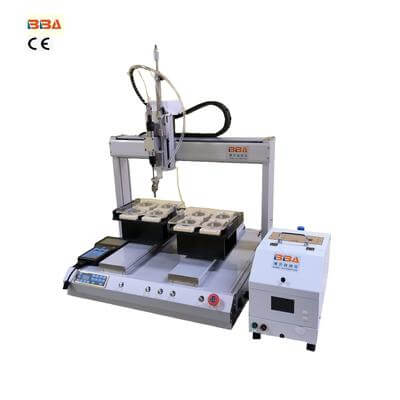
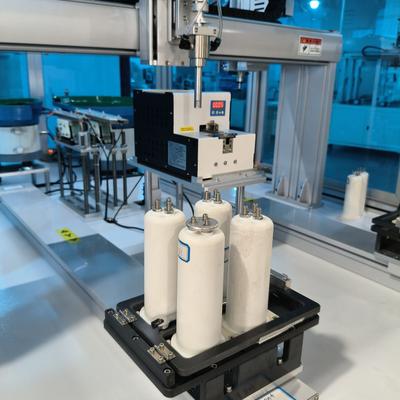
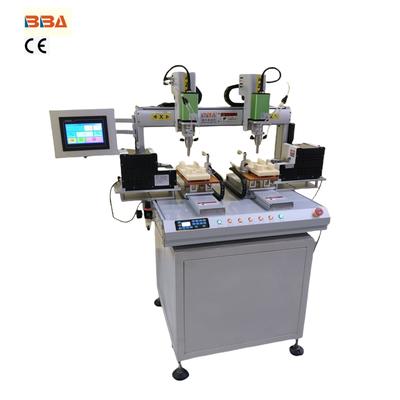
Smart Screw Driving Machine for Security Equipment Manufacturing | Industrial Automation Solution
| Product Name | Applicable Industry |
| Smart Screw Driving Machine | Security Equipment Manufacturing |
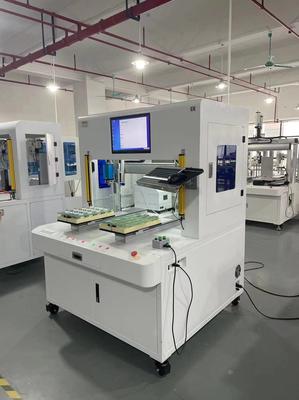
Selecting the right screw feeding system is critical for optimizing assembly line efficiency and ensuring consistent product quality. These systems are designed to handle fastening tasks with precision, but their performance depends on several key features. Below, we explore the essential factors to consider when evaluating screw feeding systems for industrial automation applications.
1. Precision and Consistency
A high-quality screw feeding system must deliver screws with pinpoint accuracy to avoid misalignment or jamming. Look for systems equipped with advanced sensors and feedback mechanisms that monitor screw positioning in real time. Features like vibration-controlled bowls or linear feeders can further enhance consistency, especially when handling small or irregularly shaped screws.
2. Compatibility with Screw Types and Sizes
Versatility is crucial in dynamic production environments. Ensure the system can accommodate a wide range of screw lengths, diameters, and head types without requiring extensive reconfiguration. Modular designs with interchangeable components or adjustable tracks allow quick adaptation to new projects, reducing downtime during product changeovers.
3. Speed and Throughput Capacity
Evaluate the system’s cycle time and maximum feed rate to ensure it aligns with your production targets. High-speed systems with dual-track feeders or parallel processing capabilities can significantly boost output for large-scale operations. However, balance speed with reliability—overly aggressive feeding mechanisms may increase error rates.
4. User-Friendly Interface and Control
An intuitive control panel with a touchscreen interface simplifies setup and monitoring. Look for systems that provide real-time diagnostics, error logging, and adjustable parameters for feed pressure or orientation. Compatibility with PLCs or factory automation networks enables seamless integration into smart manufacturing environments.
5. Maintenance and Durability
Opt for systems constructed from hardened materials like stainless steel or anodized aluminum to withstand continuous operation. Easy-access components for cleaning and maintenance reduce service interruptions. Some models feature self-cleaning mechanisms or anti-jamming technology to minimize manual intervention.
6. Safety Features
Prioritize systems with emergency stop functions, overload protection, and enclosed moving parts. Safety certifications such as CE or ISO compliance indicate adherence to industrial safety standards, protecting both operators and equipment.
7. Scalability and Future-Proofing
Consider whether the system can expand alongside your operations. Look for designs that support additional modules, such as multiple feeding lanes or robotic integration, to accommodate future automation upgrades without requiring complete system replacement.
When assessing screw feeding systems, also evaluate energy efficiency metrics and noise levels to ensure compliance with workplace regulations. Request performance data from suppliers and consider arranging live demonstrations to observe the system’s operation under conditions similar to your production environment. By prioritizing these features, manufacturers can implement a screw feeding solution that enhances productivity while maintaining rigorous quality standards.