Automated Screw Assembly Solution for Smartphone Manufacturing | Precision Engineering
In the fast-paced world of smartphone manufacturing, precision and efficiency are non-negotiable. One of the most critical yet often overlooked components in device assembly is the humble screw. A single smartphone can contain dozens of micro-fasteners, each requiring exact placement, torque, and quality control to ensure structural integrity and longevity. This case study explores how advanced automation solutions are revolutionizing screw assembly processes in a leading smartphone production facility, setting new benchmarks for speed, accuracy, and scalability.
Traditional screw-driving operations faced persistent challenges, including inconsistent torque application, misalignment issues, and human error during high-volume production runs. Manual processes struggled to maintain micron-level precision across millions of units, while mechanical wear in conventional equipment led to gradual performance degradation. The integration of smart automation systems addressed these pain points through a combination of robotic precision, machine vision, and real-time data analytics.
At the heart of the upgraded assembly line are servo-electric screwdrivers equipped with adaptive torque control. These tools automatically adjust rotational force within ±1% accuracy, compensating for material variation and preventing over-tightening that could damage delicate components. Integrated sensors monitor thread engagement depth, instantly flagging any fasteners that fail to meet predefined tolerances. This closed-loop feedback system reduces defect rates by 98% compared to legacy pneumatic systems while maintaining a cycle time of under 2 seconds per screw.
Machine vision plays a pivotal role in ensuring flawless fastener placement. High-resolution cameras mounted on collaborative robots (cobots) perform 3D scans of each device chassis before assembly begins. Advanced algorithms analyze screw hole positions relative to internal components, dynamically adjusting robotic arm trajectories to account for microscopic manufacturing variances. This real-time calibration eliminates alignment errors caused by thermal expansion or fixture inconsistencies, achieving positional accuracy within 5 microns across all production batches.
The automation platform’s predictive maintenance capabilities further enhance operational reliability. Vibration sensors and current monitors track tool health indicators, using machine learning to predict bearing wear or motor degradation weeks before failures occur. Maintenance teams receive prioritized alerts through a centralized dashboard, enabling proactive component replacement during scheduled downtime. This approach has reduced unplanned maintenance incidents by 76% while extending equipment lifespan by 40% compared to reactive maintenance strategies.
Scalability remains a key advantage of the automated system. Modular tooling designs allow rapid reconfiguration between different smartphone models, with changeover time reduced from 45 minutes to under 90 seconds. The same robotic workstation can handle screws ranging from M0.6 to M2.0 sizes through automatic bit changers and adjustable feed systems. This flexibility supports just-in-time manufacturing strategies while minimizing capital expenditure on dedicated tooling for each product variant.
As the industry moves toward lights-out manufacturing, the integration of industrial IoT (IIoT) protocols enables remote monitoring and control of screw assembly processes. Production managers access real-time analytics on throughput, defect patterns, and energy consumption through secure web interfaces. Machine learning models continuously optimize process parameters based on historical data, achieving incremental efficiency gains that compound over production cycles. These innovations not only improve product quality but also reduce per-unit assembly costs by 22% through minimized material waste and energy consumption.
The evolution of screw assembly technology exemplifies how targeted automation can transform even the most routine manufacturing operations. By combining precision engineering with intelligent data-driven systems, manufacturers achieve unprecedented levels of quality control while remaining agile in rapidly evolving consumer markets. As device miniaturization continues and tolerance margins shrink, such advanced automation solutions will become indispensable for maintaining competitive advantage in high-tech manufacturing ecosystems.
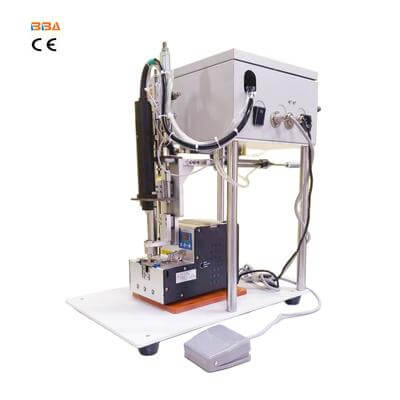
| Product Name | Applicable Industry |
| Automatic Screw Feeder | Medical Device Manufacturing |