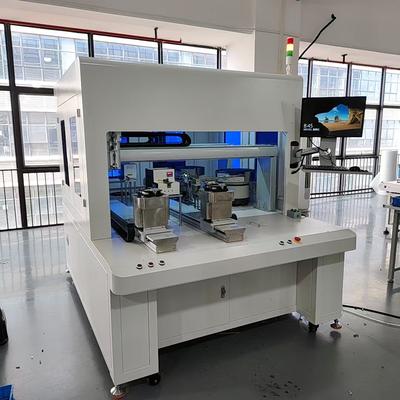
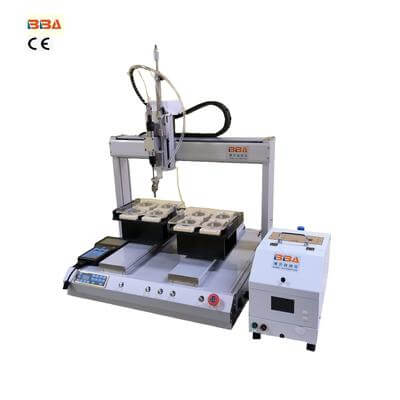
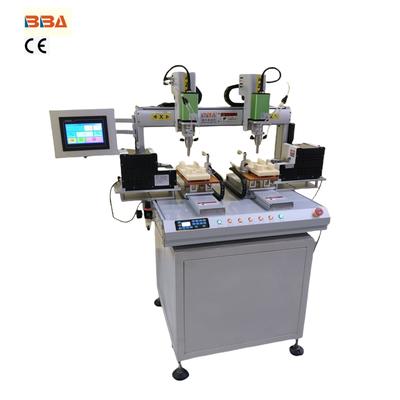
In the fast-paced world of manufacturing, efficiency and precision are non-negotiable. One of the most critical components in assembly line operations is the secure fastening of screws, which ensures product durability and functionality. Traditional manual screwdriving processes, however, are prone to human error, inconsistency, and time delays. Enter the **automatic screw locking machine**—a game-changing innovation that streamlines production workflow, reduces costs, and elevates product quality. This article explores how this technology optimizes assembly line efficiency and why it has become indispensable in modern manufacturing.
### The Limitations of Manual Screw Fastening
Manual screwdriving relies heavily on human labor, which introduces variability into the assembly process. Workers may apply inconsistent torque, misalign screws, or overlook fastening steps entirely due to fatigue. These errors lead to product defects, increased rework rates, and potential safety hazards. Additionally, manual processes are time-consuming, limiting throughput and scalability as production demand grows. For industries where precision and speed are critical—such as electronics, automotive, or aerospace—these inefficiencies can erode profitability and competitiveness.
### How Automatic Screw Locking Machines Work
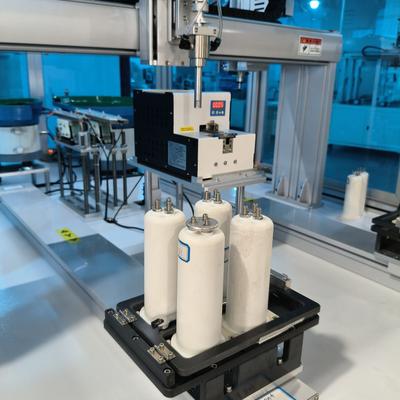
Automatic screw locking machines integrate advanced robotics, precision sensors, and programmable logic controllers (PLCs) to perform screwdriving tasks with unmatched accuracy. Here’s a breakdown of their operation:
1. **Screw Feeding**: A vibratory bowl feeder or pneumatic system aligns screws and delivers them to the machine’s driving head.
2. **Positioning**: Vision systems or laser guides ensure the screwdriver bit aligns perfectly with the target hole.
3. **Fastening**: The machine applies pre-programmed torque and rotation speed to secure the screw, eliminating over-tightening or under-tightening.
4. **Quality Verification**: Integrated sensors verify each screw’s depth, torque, and angle, flagging defects in real time.
This closed-loop process minimizes human intervention, ensuring repeatability across thousands of cycles.
### Key Benefits for Assembly Line Efficiency
1. **Faster Cycle Time**: Automated systems can drive screws in seconds, significantly outpacing manual labor. For example, a high-speed machine can secure 50+ screws per minute, reducing bottlenecks in high-volume production.
2. **Enhanced Precision**: Programmable torque settings guarantee uniform fastening, preventing product failure caused by loose or damaged screws.
3. **Labor Cost Reduction**: Automating repetitive tasks allows manufacturers to redeploy workers to higher-value roles, such as quality control or machine maintenance.
4. **Scalability**: These machines adapt seamlessly to varying production volumes, making them ideal for both small-batch and mass-production environments.
5. **Data-Driven Insights**: Modern systems log performance metrics (e.g., torque curve, error rate) for analysis, enabling continuous process optimization.
### Applications Across Industries
Automatic screw locking machines are versatile enough to handle diverse products:
- **Electronics**: Securing circuit boards, smartphone casings, and battery compartments.
- **Automotive**: Assembling engines, dashboards, and interior components.
- **Medical Devices**: Fastening surgical tools or diagnostic equipment where precision is life-critical.
- **Consumer Goods**: Building appliances, furniture, and toys with consistent quality.
### Future Trends and Integration
As Industry 4.0 reshapes manufacturing, automatic screw locking systems are evolving with IoT connectivity and AI-driven predictive maintenance. Smart machines can now communicate with ERP systems to adjust production schedules dynamically or self-diagnose mechanical issues before downtime occurs. Additionally, collaborative robots (cobots) are being paired with these systems to create hybrid workstations where humans and machines collaborate safely on complex assemblies.
### Conclusion
The automatic screw locking machine is more than a tool—it’s a strategic asset for manufacturers aiming to thrive in a competitive landscape. By eliminating human error, accelerating production, and delivering data-backed reliability, this technology empowers businesses to meet rising consumer demands while maintaining stringent quality standards. As automation continues to advance, adopting such solutions will no longer be optional but essential for staying ahead in the race for industrial excellence.