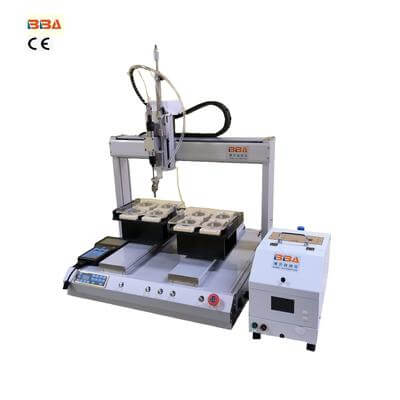
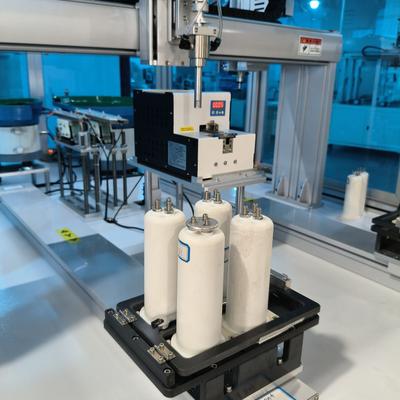
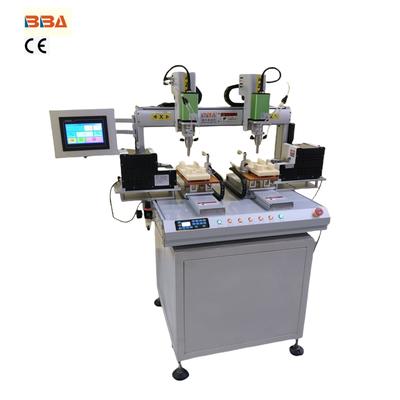
In the rapidly evolving landscape of home appliance manufacturing, precision and efficiency have become non-negotiable. One technology driving this transformation is **servo-based screw driving**, a method that combines advanced motion control with intelligent automation to redefine assembly processes. This innovation addresses critical challenges in production lines while aligning with modern demand for sustainability and smart manufacturing.
### The Mechanics of Servo-Driven Screw Fastening
At its core, servo-based screw driving systems utilize programmable servo motors to manage torque, angle, and speed with microscopic accuracy. Unlike traditional pneumatic or DC motor-driven tools, these systems employ closed-loop feedback mechanisms that continuously adjust parameters during the fastening process. A typical setup includes:
- High-torque servo motors with precision gearboxes
- Integrated torque/angle monitoring sensors
- Real-time data acquisition modules
- Adaptive control algorithms
This architecture allows for dynamic compensation of variables such as material deformation, thread friction variation, and component misalignment – factors that frequently cause quality issues in high-volume production.
### Operational Advantages in Appliance Assembly
1. **Error-Proofing Capabilities**
Modern systems detect cross-threading events within 0.5 rotation and automatically initiate corrective sequences, reducing scrap rates by up to 92% in motor assembly applications.
2. **Multi-Stage Tightening Protocol**
Complex fastening sequences (e.g., pre-torque seating followed by final torque-angle tightening) are executed with repeatability under 0.1° angular variance, critical for compressor installations in refrigeration units.
3. **Energy Optimization**
Servo systems consume 40-60% less energy compared to pneumatic alternatives by eliminating constant air compression needs and implementing regenerative braking technology.
4. **Tooling Flexibility**
A single servo driver can be reconfigured via software to handle M3 screws in smartphone-sized components or M12 bolts in washing machine chassis assembly, reducing changeover time by 75%.
### Implementation Case Study: Washing Machine Production
A major appliance manufacturer implemented servo screwdrivers across their drum assembly line with these results:
- Cycle time reduction: 22% faster than previous pneumatic system
- Defect rate: Dropped from 3.1% to 0.4% across 12,000 units/month
- Maintenance cost: 68% reduction in annual tool servicing expenses
- Data integration: Real-time torque curve analysis integrated with MES for predictive QC
The system's ability to handle mixed-product batches (15 different drum models) without mechanical adjustments proved particularly valuable for flexible manufacturing strategies.
### Sustainability Impact
Servo technology contributes to green manufacturing through:
- 55% lower carbon footprint per assembly station vs. conventional systems
- Elimination of lubricant use in screw driving processes
- 92% recyclability rate for servo components
- Energy recovery systems that feed excess power back into facility grids
### Future Developments
Emerging innovations include:
- **AI-powered anomaly detection** using torque signature analysis
- **Self-calibrating tools** with embedded IoT sensors
- **Haptic feedback integration** for collaborative robot (cobot) applications
- **Micro-fastening systems** for next-gen compact appliances
As appliance designs grow more complex and sustainability regulations tighten, servo-based screw driving systems are transitioning from premium solutions to essential manufacturing infrastructure. Their ability to merge precision engineering with smart factory connectivity positions this technology as a cornerstone of Industry 4.0 in consumer goods production. Manufacturers adopting these systems report not only immediate quality improvements but also future-proofed assembly lines capable of adapting to evolving product designs and environmental standards.
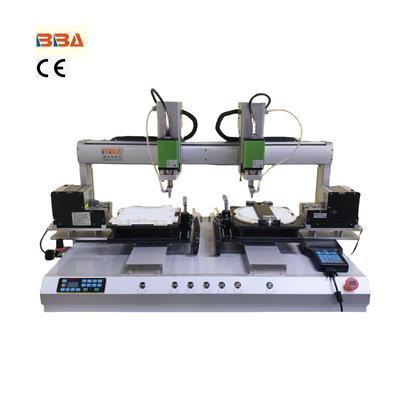 In the rapidly evolving landscape of home appliance manufacturing, precision and efficiency have become non-negotiable. One technology driving this transformation is **servo-based screw driving**, a method that combines advanced motion control with intelligent automation to redefine assembly processes. This innovation addresses critical challenges in production lines while aligning with modern demand for sustainability and smart manufacturing.
### The Mechanics of Servo-Driven Screw Fastening
At its core, servo-based screw driving systems utilize programmable servo motors to manage torque, angle, and speed with microscopic accuracy. Unlike traditional pneumatic or DC motor-driven tools, these systems employ closed-loop feedback mechanisms that continuously adjust parameters during the fastening process. A typical setup includes:
- High-torque servo motors with precision gearboxes
- Integrated torque/angle monitoring sensors
- Real-time data acquisition modules
- Adaptive control algorithms
This architecture allows for dynamic compensation of variables such as material deformation, thread friction variation, and component misalignment – factors that frequently cause quality issues in high-volume production.
### Operational Advantages in Appliance Assembly
1. **Error-Proofing Capabilities**
Modern systems detect cross-threading events within 0.5 rotation and automatically initiate corrective sequences, reducing scrap rates by up to 92% in motor assembly applications.
2. **Multi-Stage Tightening Protocol**
Complex fastening sequences (e.g., pre-torque seating followed by final torque-angle tightening) are executed with repeatability under 0.1° angular variance, critical for compressor installations in refrigeration units.
3. **Energy Optimization**
Servo systems consume 40-60% less energy compared to pneumatic alternatives by eliminating constant air compression needs and implementing regenerative braking technology.
4. **Tooling Flexibility**
A single servo driver can be reconfigured via software to handle M3 screws in smartphone-sized components or M12 bolts in washing machine chassis assembly, reducing changeover time by 75%.
### Implementation Case Study: Washing Machine Production
A major appliance manufacturer implemented servo screwdrivers across their drum assembly line with these results:
- Cycle time reduction: 22% faster than previous pneumatic system
- Defect rate: Dropped from 3.1% to 0.4% across 12,000 units/month
- Maintenance cost: 68% reduction in annual tool servicing expenses
- Data integration: Real-time torque curve analysis integrated with MES for predictive QC
The system's ability to handle mixed-product batches (15 different drum models) without mechanical adjustments proved particularly valuable for flexible manufacturing strategies.
### Sustainability Impact
Servo technology contributes to green manufacturing through:
- 55% lower carbon footprint per assembly station vs. conventional systems
- Elimination of lubricant use in screw driving processes
- 92% recyclability rate for servo components
- Energy recovery systems that feed excess power back into facility grids
### Future Developments
Emerging innovations include:
- **AI-powered anomaly detection** using torque signature analysis
- **Self-calibrating tools** with embedded IoT sensors
- **Haptic feedback integration** for collaborative robot (cobot) applications
- **Micro-fastening systems** for next-gen compact appliances
As appliance designs grow more complex and sustainability regulations tighten, servo-based screw driving systems are transitioning from premium solutions to essential manufacturing infrastructure. Their ability to merge precision engineering with smart factory connectivity positions this technology as a cornerstone of Industry 4.0 in consumer goods production. Manufacturers adopting these systems report not only immediate quality improvements but also future-proofed assembly lines capable of adapting to evolving product designs and environmental standards.
In the rapidly evolving landscape of home appliance manufacturing, precision and efficiency have become non-negotiable. One technology driving this transformation is **servo-based screw driving**, a method that combines advanced motion control with intelligent automation to redefine assembly processes. This innovation addresses critical challenges in production lines while aligning with modern demand for sustainability and smart manufacturing.
### The Mechanics of Servo-Driven Screw Fastening
At its core, servo-based screw driving systems utilize programmable servo motors to manage torque, angle, and speed with microscopic accuracy. Unlike traditional pneumatic or DC motor-driven tools, these systems employ closed-loop feedback mechanisms that continuously adjust parameters during the fastening process. A typical setup includes:
- High-torque servo motors with precision gearboxes
- Integrated torque/angle monitoring sensors
- Real-time data acquisition modules
- Adaptive control algorithms
This architecture allows for dynamic compensation of variables such as material deformation, thread friction variation, and component misalignment – factors that frequently cause quality issues in high-volume production.
### Operational Advantages in Appliance Assembly
1. **Error-Proofing Capabilities**
Modern systems detect cross-threading events within 0.5 rotation and automatically initiate corrective sequences, reducing scrap rates by up to 92% in motor assembly applications.
2. **Multi-Stage Tightening Protocol**
Complex fastening sequences (e.g., pre-torque seating followed by final torque-angle tightening) are executed with repeatability under 0.1° angular variance, critical for compressor installations in refrigeration units.
3. **Energy Optimization**
Servo systems consume 40-60% less energy compared to pneumatic alternatives by eliminating constant air compression needs and implementing regenerative braking technology.
4. **Tooling Flexibility**
A single servo driver can be reconfigured via software to handle M3 screws in smartphone-sized components or M12 bolts in washing machine chassis assembly, reducing changeover time by 75%.
### Implementation Case Study: Washing Machine Production
A major appliance manufacturer implemented servo screwdrivers across their drum assembly line with these results:
- Cycle time reduction: 22% faster than previous pneumatic system
- Defect rate: Dropped from 3.1% to 0.4% across 12,000 units/month
- Maintenance cost: 68% reduction in annual tool servicing expenses
- Data integration: Real-time torque curve analysis integrated with MES for predictive QC
The system's ability to handle mixed-product batches (15 different drum models) without mechanical adjustments proved particularly valuable for flexible manufacturing strategies.
### Sustainability Impact
Servo technology contributes to green manufacturing through:
- 55% lower carbon footprint per assembly station vs. conventional systems
- Elimination of lubricant use in screw driving processes
- 92% recyclability rate for servo components
- Energy recovery systems that feed excess power back into facility grids
### Future Developments
Emerging innovations include:
- **AI-powered anomaly detection** using torque signature analysis
- **Self-calibrating tools** with embedded IoT sensors
- **Haptic feedback integration** for collaborative robot (cobot) applications
- **Micro-fastening systems** for next-gen compact appliances
As appliance designs grow more complex and sustainability regulations tighten, servo-based screw driving systems are transitioning from premium solutions to essential manufacturing infrastructure. Their ability to merge precision engineering with smart factory connectivity positions this technology as a cornerstone of Industry 4.0 in consumer goods production. Manufacturers adopting these systems report not only immediate quality improvements but also future-proofed assembly lines capable of adapting to evolving product designs and environmental standards.