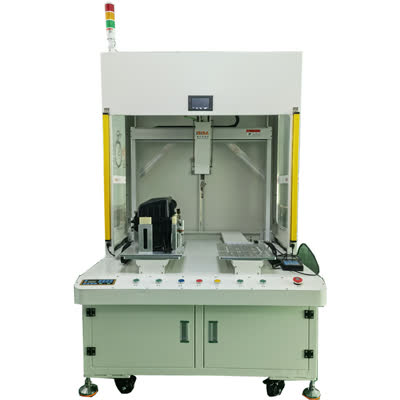
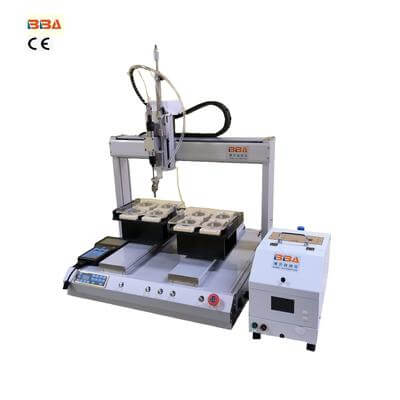
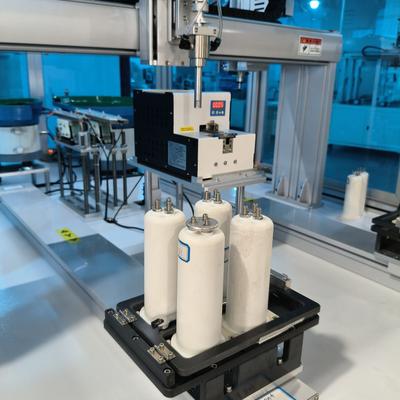
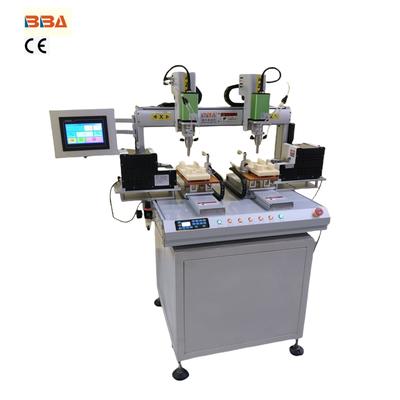
Industrial Robotics & Automated Screw Locking Systems | Precision Manufacturing Solutions
| Product Name | Applicable industries |
| Auto Screwdriver Machine | Consumer Electronics Assembly |
| Screw Locking Robot | Automotive Electronics Assembly |
| Screw Fastening Unit | Home Appliance Production |
| Servo Screwdriver Robot | PCB and Circuit Board Assembly |
| Automatic Screw Feeder | Laptop and Tablet Assembly |
| Desktop Screwdriver Robot | Medical Device Manufacturing |
| CNC Screw Fastener | Drone and UAV Manufacturing |
| Smart Screw Driving Machine | Toy and Game Console Production |
| Dual Head Screwdriver | Smart Wearables Production |
| Inline Screw Locking System | Security Equipment Manufacturing |
Robotics Manufacturing and Screw Locking Integration: Revolutionizing Industrial Automation
The manufacturing industry is undergoing a transformative shift, driven by the convergence of robotics and precision automation technologies. Among these advancements, the integration of robotic systems with automated screw locking solutions has emerged as a cornerstone for optimizing production efficiency, enhancing product quality, and reducing operational costs.
The Evolution of Robotic Assembly
Modern robotics manufacturing prioritizes seamless integration across production stages. Advanced robotic arms equipped with adaptive grippers and vision systems now handle tasks ranging from component placement to final assembly. When combined with automated screw driving mechanisms, these robotic systems eliminate bottlenecks in fastening processes – a critical step in industries such as automotive, electronics, and machinery production.
Key Technologies Enabling Precision Integration
- Force-Torque Sensors: Enable real-time feedback for consistent screw seating and prevention of cross-threading
- Vision-Guided Robotics: Ensure millimeter-level accuracy in screw placement across varied product geometries
- Modular Tooling: Allow rapid changeovers between screw types and sizes without production downtime
Operational Advantages in Manufacturing
Integrated screw locking systems deliver measurable improvements in production metrics. By automating the entire fastening process – from screw feeding to final torque verification – manufacturers achieve:
✔ 40-60% faster cycle times compared to manual operations
✔ 99.8% screw placement accuracy through AI-powered error correction
✔ 50% reduction in component damage from over-torquing
Smart Manufacturing Convergence
Next-generation systems incorporate IoT connectivity for predictive maintenance and process optimization. Embedded sensors monitor tool wear, torque patterns, and environmental conditions, feeding data into centralized production analytics platforms. This digital integration creates a closed-loop system that automatically adjusts parameters based on real-time performance data.
Future-Ready Production Solutions
As industry demands evolve toward smaller batch sizes and customized products, flexible robotic screw locking systems demonstrate exceptional adaptability. Machine learning algorithms enable rapid reprogramming for new product configurations, while collaborative robot (cobot) implementations allow safe human-robot interaction in mixed assembly environments.
The strategic integration of robotics and automated fastening technologies represents more than an incremental improvement – it establishes a new paradigm in manufacturing excellence. By embracing these solutions, manufacturers gain the agility to meet evolving market demands while maintaining uncompromising standards for quality and efficiency.