Multi-Axis Screw System Performance Metrics | Industrial Automation Guide
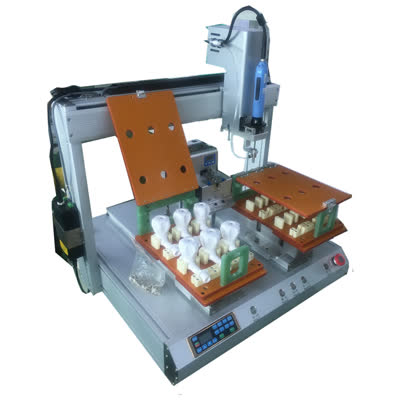
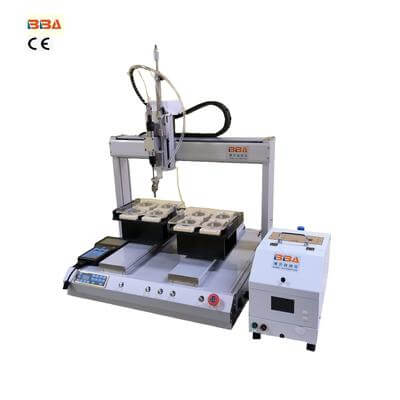
| Product Name | Applicable industries |
| Desktop Screwdriver Robot | Smart Wearables Production |
Performance Metrics of Multi-Axis Screw Systems
Multi-axis screw systems are the backbone of modern industrial automation, providing the precision, power, and reliability required for complex motion control applications. From high-speed packaging machinery to intricate assembly robots, the performance of these systems directly impacts overall equipment effectiveness (OEE), product quality, and production throughput. Understanding and evaluating the key performance metrics of these systems is therefore crucial for engineers and system integrators aiming to design, optimize, and maintain high-performing automation solutions.
Critical Performance Indicators
When specifying or analyzing a multi-axis screw system, several interrelated metrics must be considered to ensure it meets the application's demands.
Positioning Accuracy and Repeatability: This is perhaps the most fundamental metric. Accuracy refers to the system's ability to move to a commanded theoretical position, while repeatability is its capability to return to the same position consistently over multiple cycles. High-precision manufacturing, such as in electronics or medical device assembly, demands exceptionally low values for both.
Velocity Regulation and Settling Time: The system must not only move quickly but also maintain a constant programmed velocity under varying load conditions, known as velocity regulation. Furthermore, settling time—the duration it takes for the axis to come to a complete and stable rest at the target position after a move—is vital for maximizing cycle times. Minimizing settling time without overshoot is a key goal for high-speed applications.
Rigidity and Stiffness: The mechanical rigidity of the screw system, including the screw shaft, support bearings, and nut assembly, determines its resistance to deformation under load. A stiffer system provides higher natural frequencies, reduces vibration, and improves dynamic response, leading to better contouring performance in coordinated multi-axis moves.
Dynamic Load Capacity and Life Expectancy: This metric predicts the operational life of the screw drive based on the applied loads and speeds. It is typically calculated using the L10 life formula, which estimates the number of travel hours or distance at which 90% of a group of identical screws will still be operational. Proper sizing based on dynamic load is essential for reliability and minimizing unplanned downtime.
Efficiency and Thermal Growth: Ball screws and planetary roller screws convert rotational motion to linear motion with high efficiency. However, this process still generates heat due to friction. Understanding the system's efficiency helps predict heat generation, which can cause thermal expansion of the screw shaft. This expansion can introduce positioning errors if not managed through proper selection, cooling, or compensation algorithms in the controller.
System-Level Integration Factors
Beyond the individual component metrics, the performance of the integrated system is paramount.
Contour Error: In synchronized multi-axis motion, such as in CNC machining or robotic path following, contour error is the deviation from the intended tool path. This is a holistic measure of how well all axes work together, influenced by the servo tuning, mechanical backlash, and stiffness of each drive.
Power Consumption and Regeneration: The overall electrical efficiency of the system is increasingly important. Modern servo drives can often regenerate power during deceleration phases and feed it back to the grid. Selecting components that work efficiently together can significantly reduce the total cost of ownership.
Vibration and Acoustical Noise: Performance is not just about speed and precision but also about smooth and quiet operation. Excessive vibration can lead to premature wear and product damage, while high noise levels may violate workplace regulations.
Conclusion
Evaluating multi-axis screw systems requires a comprehensive view that balances individual component metrics with overall system performance. By carefully analyzing positioning accuracy, dynamic response, rigidity, life expectancy, and thermal behavior, automation professionals can select the optimal drive technology for their specific application. This rigorous approach ensures the creation of robust, efficient, and highly reliable automated machinery that delivers maximum productivity and a strong return on investment. Continuous monitoring of these metrics during operation further enables predictive maintenance strategies, preventing failures before they occur.