Real-Time Error Detection in Screw Locking Process | Precision Manufacturing Solutions
| Product Name | Applicable industries |
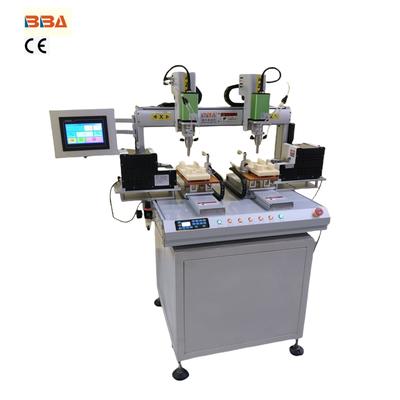
| Dual Head Screwdriver | Consumer Electronics Assembly |
Real-Time Error Detection in Screw Locking Processes: Enhancing Precision in Manufacturing
In modern manufacturing, screw locking is a foundational process across industries such as automotive, electronics, and aerospace. Despite its apparent simplicity, improperly tightened screws can lead to costly product failures, recalls, or safety hazards. This underscores the critical need for real-time error detection systems to ensure precision and reliability.
The Challenges of Traditional Screw Locking
Conventional screw locking processes often rely on manual inspections or periodic quality checks. These methods introduce significant limitations:
- Delayed defect identification, resulting in increased scrap rates
- Human error in torque measurement and visual inspections
- Inability to detect cross-threading, stripped screws, or material inconsistencies
How Real-Time Error Detection Works
Advanced systems leverage integrated sensors and machine learning algorithms to monitor multiple parameters during the screw locking cycle:
- Torque-angle correlation analysis
- Vibration pattern recognition
- Thread engagement verification via force feedback
- Instantaneous torque curve validation
Key Benefits for Industrial Automation
Implementing real-time error detection transforms production outcomes:
- 97%+ defect detection accuracy during assembly
- Reduced rework costs by up to 40%
- 30% faster process optimization through data-driven insights
- Compliance with ISO 9001 and IATF 16949 quality standards
Adaptive Learning for Complex Applications
Modern systems utilize self-improving algorithms that analyze historical performance data to:
- Automatically adjust torque thresholds for different materials
- Predict tool maintenance needs based on performance drift
- Optimize screwdriving patterns for mixed-product lines
Implementation Strategies
Successful integration requires:
- Retrofitting existing assembly lines with IoT-enabled sensors
- Secure cloud-based data aggregation platforms
- Customizable alert systems for different error severity levels
As manufacturing tolerances tighten and production speeds increase, real-time error detection has evolved from being an optional upgrade to an essential quality assurance solution. By preventing defective assemblies from progressing down the line, manufacturers maintain product integrity while maximizing operational efficiency – a critical advantage in today's competitive industrial landscape.