Intelligent Programming for Automated Screw Tightening Systems | Smart Manufacturing
| Product Name | Applicable industries |
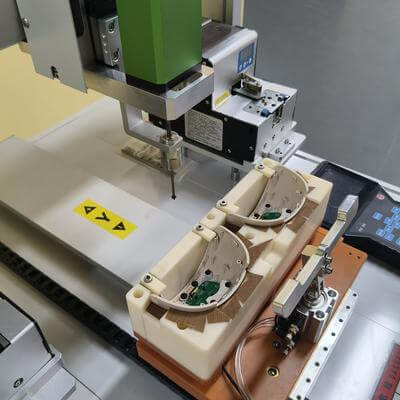
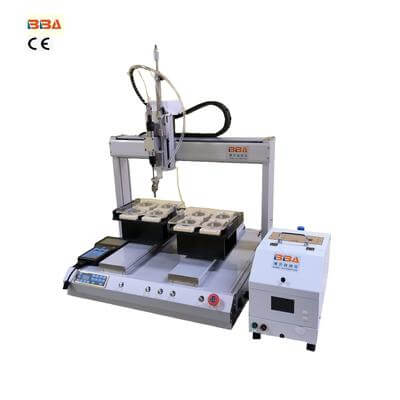
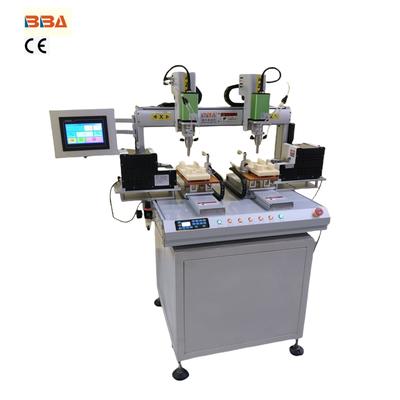
| Servo Screwdriver Robot | Power Tool Assembly Lines |
Intelligent Programming for Screw Tightening Operations
In the world of modern manufacturing, precision is not just a goal—it is an absolute necessity. The integrity of countless products, from consumer electronics to heavy machinery, hinges on the reliability of the smallest components. Among these, the screw tightening process stands out as a fundamental yet critically important operation. Traditional methods, reliant on manual labor or basic automated systems, often struggle with consistency, accuracy, and data traceability. This is where intelligent programming transforms the landscape, introducing a new era of smart, connected, and highly efficient screw fastening solutions.
What is Intelligent Programming?
Intelligent programming refers to the development of sophisticated software algorithms that govern the operation of automated screwdriving systems. Unlike conventional programs that execute a simple, rigid set of instructions, intelligent systems are capable of making real-time decisions based on sensory feedback and predefined quality parameters. This approach moves beyond basic torque control, integrating angle monitoring, gradient calculation, and continuous data analysis to ensure every fastener is secured perfectly.
At its core, this technology creates a closed-loop system. The programmer defines the precise parameters for a successful joint—the target torque, the acceptable angle window, and the desired tightening strategy. During operation, the system's controller constantly monitors the application, comparing live data against these benchmarks. If any deviation from the expected pattern is detected, such as cross-threading or a missing screw, the system can instantly halt, alert operators, and log the error for root cause analysis.
Key Advantages of Intelligent Tightening Systems
The implementation of intelligently programmed screw tightening offers a multitude of benefits that directly impact production quality and operational efficiency.
- Unmatched Precision and Consistency: By dynamically adjusting the tightening process in real-time, these systems eliminate the common issues of over-torquing and under-torquing. Each fastener is applied with identical accuracy, drastically reducing the risk of product failure due to loose components or damaged threads.
- Comprehensive Data Traceability: Every single tightening operation is recorded. This creates a complete digital history for each product, storing key values like final torque, rotation angle, and time spent. This data is invaluable for quality audits, warranty claims, and continuous process improvement initiatives.
- Enhanced Operational Efficiency: Automated systems equipped with intelligent programming work tirelessly with incredible speed. They significantly reduce cycle times compared to manual labor and minimize production bottlenecks. Furthermore, by preventing errors early in the process, they reduce the need for costly rework and repairs down the line.
- Reduced Operator Fatigue and Error: Automating this repetitive and physically demanding task allows human workers to focus on more complex, value-added activities. It also removes the variability inherent in manual operations, ensuring a consistently high-quality output regardless of shifts or individual operator skill levels.
The Future is Adaptive and Connected
The next evolution in intelligent programming lies in machine learning and IoT connectivity. Future systems will not only react to data but will also learn from it. By analyzing vast datasets from production lines, algorithms can predict tool wear, identify subtle patterns leading to defects, and even proactively recommend adjustments to tightening strategies for new materials or designs.
Furthermore, these systems will be fully integrated into the smart factory ecosystem. Tightening data will be seamlessly shared with Manufacturing Execution Systems (MES) and Enterprise Resource Planning (ERP) platforms, providing a holistic view of production health and enabling truly agile manufacturing.
In conclusion, intelligent programming is the cornerstone of next-generation screw tightening operations. It represents a significant leap from simple automation to smart, data-driven manufacturing. For companies striving to achieve the highest levels of quality, efficiency, and traceability, investing in this technology is no longer an option but a critical imperative for maintaining a competitive edge in the industrial landscape.